

CBS Eurostat
Croatia Officially Has the Highest Inflation in the Eurozone: Utilities and Food Becoming a Luxury
31.03.2026.
07/12/2022

The EU Council for Economic and Financial Affairs (Ecofin) adopted three final legal acts needed for Croatia to introduce the euro on January 1, 2023, including the decision on the conversion rate of the kuna to the euro at the central parity of 1 euro = 7.53450 kuna. The final exchange rate is the same as the one at which the kuna was included in the European Exchange Rate Mechanism (ERM II) two years ago.
Along with the regulation establishing the final conversion rate of the kuna to the euro, Ecofin also adopted two other legal acts – the decision on the adoption of the euro in Croatia and an amendment to the regulation in which Croatia will be added to the list of 19 euro area members as the 20th member. With today's decisions, the decision-making procedure in the Council has been completed and Croatia becomes the 20th member of the euro area on January 1, 2023.
“I would like to congratulate my colleague Zdravko Marić and all of Croatia on becoming the 20th country to join the euro area. The introduction of the euro is not a race, but a responsible political decision. Croatia has successfully met all the necessary economic criteria and will pay in euros from January 1, 2023,” said Czech Finance Minister Zbynek Stanjura, who chairs Ecofin.
Croatia has thus fulfilled one of the two remaining strategic goals of joining deeper integration within the EU. The other is entry into the Schengen area, on which a decision will, very likely, be made this autumn, and Croatia could in its tenth year of membership simultaneously enter both the euro area and Schengen.
The key documents for the decision on entering the euro area were the convergence reports of the Commission and the European Central Bank (ECB), which were published on June 1.
They confirmed that Croatia meets all four nominal convergence criteria and that its legislation is fully aligned with the requirements of the EU Treaty and the Statute of the European System of Central Banks/European Central Bank.
With Ecofin's decisions, Croatia joins the euro area, which today has more than 340 million inhabitants and is the second largest economy in the world, accounting for 15 percent of global GDP.
Four months before the arrival of the euro, mandatory dual display of prices in kuna and euros will begin in Croatia at the start of September. The obligation of dual price display will last throughout the whole of next year.
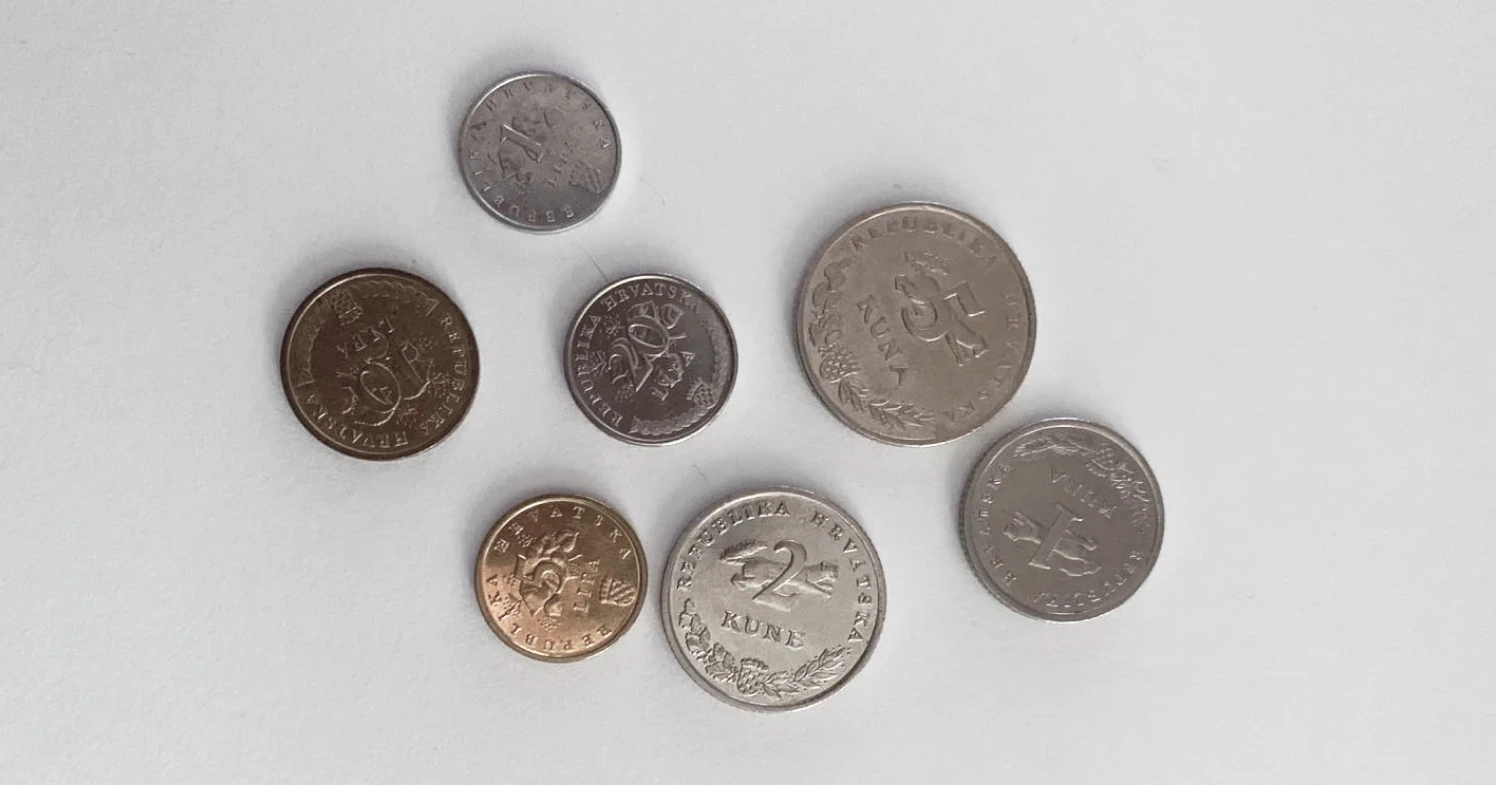
The withdrawal of kuna and the release into circulation of euro banknotes and coins is a very complex operation because in a very short time it will be necessary to withdraw more than 500 million pieces of kuna banknotes and more than 1.1 billion pieces of kuna and lipa coins. At the same time, comparable quantities of euro banknotes and coins will need to be put into circulation.
In the first two weeks after entering the euro area, dual circulation will be in force, and both kuna and euro may be used.
After that, in banks during the first six months it will be possible to exchange kuna for euros free of charge, and in the following six months for a fee. After 12 months from the introduction of the euro, cash may be exchanged only at the HNB. Coins may be exchanged up to three years after the introduction of the euro, while banknotes may be exchanged permanently.
Four months before the introduction of the euro, banks, Fina, and Hrvatska pošta will need to be supplied with euro banknotes and coins. Shops and other companies will also have to be supplied with cash in a timely manner so that they can carry out cash transactions in the new currency from the first day.
Advance supply of euro banknotes and coins differs. Banknotes are borrowed from the European Central Bank, while coinage will be produced in Croatia, since, unlike banknotes which are the same in all countries, euro and cent coins display the national symbols of the member states on the reverse side.
All Croatian coins will have the checkerboard as the background, and then on the two-euro coin a map of Croatia, on the one-euro coin a marten, Nikola Tesla on the 50, 20 and 10 cent coins, while on the 5, 2 and 1 cent coins HR will be written in Glagolitic script.
September 5, 2022 – the period of dual display of prices and other monetary expressions of value begins (that is, the first Monday of the month following the month in which thirty days will have passed from the date of publication of the EU Council decision on the adoption of the euro)
January 1, 2023 – the euro becomes legal tender in the Republic of Croatia
January 1, 2023 until January 14, 2023 – the period of dual circulation lasts (both kuna and euro are used)
January 1, 2024 – the obligation of dual display of prices ends
Source: Index.hr