


Eurostat inflation
While Prices Fall Across the EU, They Rise in Croatia: Why Is Croatia Defying the European Trend?
25.06.2025.
07/18/2025
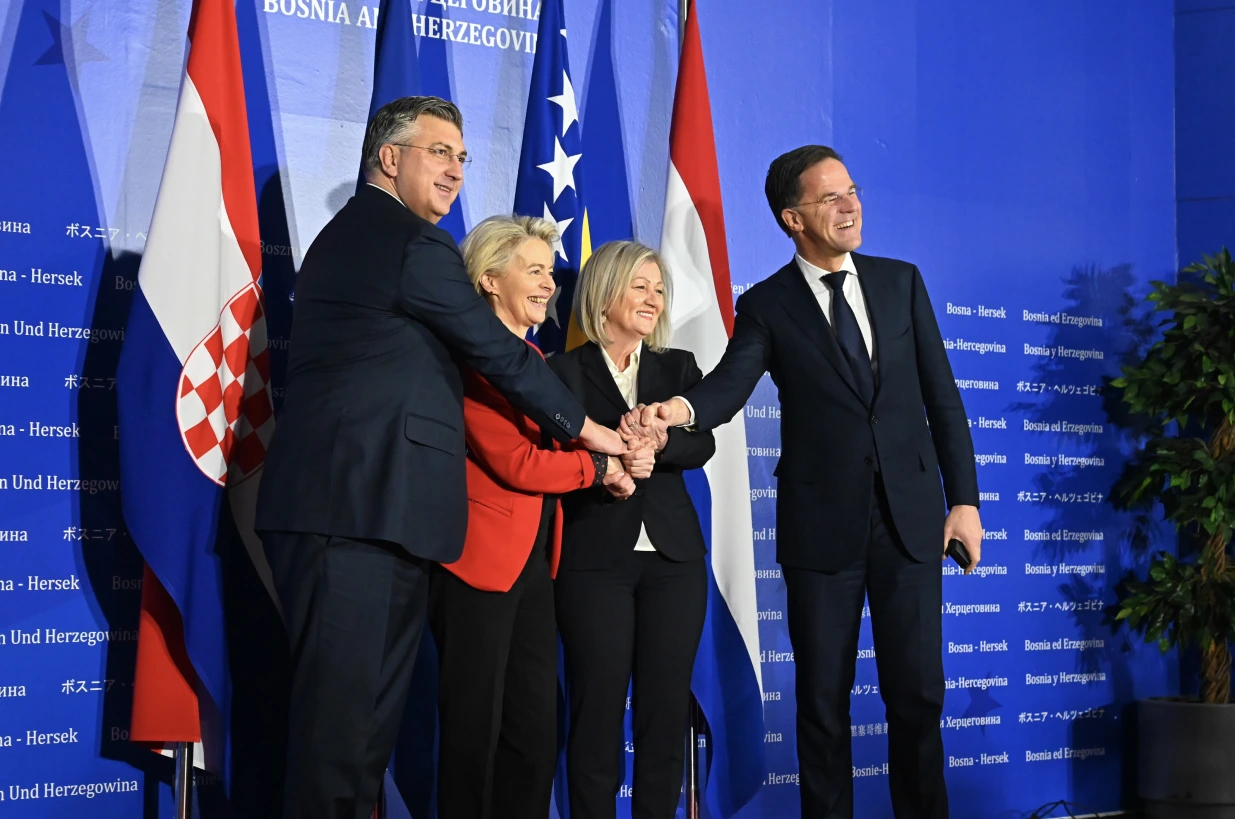
Photo: 'Visit of Ursula von der Leyen to Bosnia and Herzegovina, 2024.# European Commission / Audiovisual Service. Licensed under CC BY 4.0 (cropped from the original photograph)
The European Commission has proposed that Croatia receive 16.8 billion euros through the multiannual European budget in the period from 2028 to 2034. This amount is included within national and regional plans, with special emphasis on funds for cohesion and agriculture.
The European Commission published its proposal for the next long-term budget of the European Union, known as the Multiannual Financial Framework (MFF), for the period from 2028 to 2034 on 16 July 2025. This proposal reaches almost two trillion euros, or 1.26 percent of the European Union's average gross national income, emphasizing the Union's ambition to be independent, safer, and more competitive in the years to come
Croatia among the biggest beneficiaries
For Croatia, a national allocation amounting to 16.8 billion euros over seven years is envisaged, including funds for cohesion and agriculture, but also specifically targeted funds for migration, security and internal affairs (1.3 billion euros) and climate protection projects (1 billion euros). These funds are intended for national and regional partnership plans, making Croatia stand out as a prominent beneficiary of funds for balanced regional development, modernization, and achieving climate goals.
For comparison, from the current MFF for the period 2021-2027, Croatia had just under 15 billion euros available from the budget envelope, while the total availability of funds, including the so-called Next Generation EU instrument, exceeded 25 billion euros thanks to additional recovery measures after the pandemic.
Budget items for development and innovation
In addition to national envelopes, member states will also be able to use funds from other parts of the budget, especially from the new Competitiveness Fund, worth 450 billion euros, whose aim is to encourage innovation, investment in economic resilience, security, the defense industry, and space technologies. Within that fund, as much as 131 billion euros is intended for defense and space projects, which is five times more than the current levels of European Union investment in defense sectors at the Union level.
Additionally, development programs such as Interreg and other cohesion policy instruments continue to support cooperation among member states, and 10 billion euros has been proposed for the Interreg program alone at the level of the entire Union.
Priorities of the new budget
The MFF proposal strengthens the flexibility of fund allocation, enabling the European Union and member states to respond more quickly and effectively to crisis situations and unforeseen challenges, such as migration, food security, or defense. Significant investments are also envisaged in the energy and digital transition, crisis preparedness, and strengthening competitiveness, with special emphasis on balanced regional development, innovation, and strengthening the Union's defense capability.
Negotiations are only just beginning
This proposal marks the beginning of a lengthy negotiation process that will involve the European Parliament and the Council of the European Union, with final adoption planned for January 2028. Member states are expected to examine each budget item in detail and its impact on national priorities, while the first draft of the negotiation framework will be prepared by the end of the year so that member state leaders can consider it at the summit in the second half of December.
The European Union's new budget proposal for the period 2028-2034 secures Croatia a record envelope for investment in development, security, and transition, while at the same time implying opportunities and challenges for future state budget planning. Given the upcoming multiannual negotiations, only the final figures will show whether Croatia will ultimately achieve the full scope of the envisaged funds.