

Glas Hercegovine Bosnia and Herzegovina
After 12 Years He Left Germany: 'The More Money I Had, the Unhappier I Became'
01.09.2026.
08/29/2025
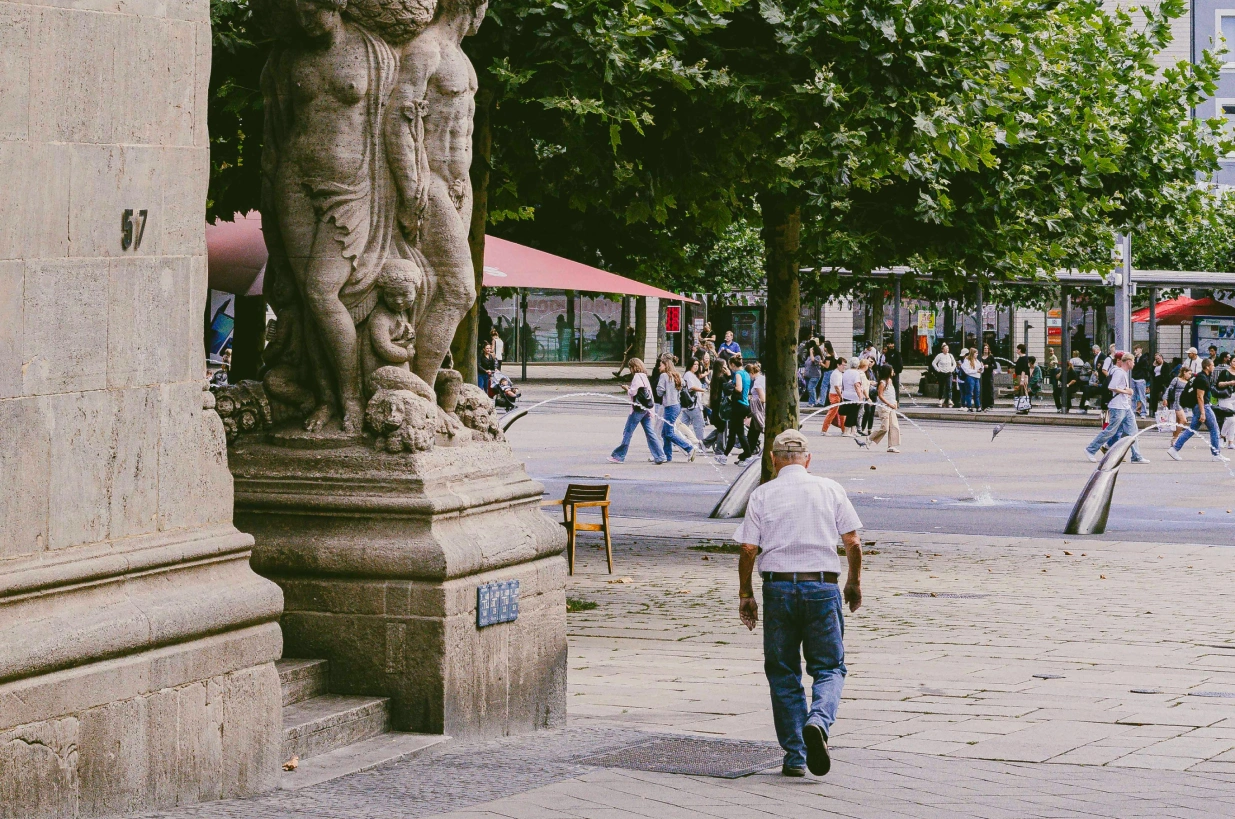
In Germany, the number of unemployed in August 2025 exceeded three million, which has not happened in almost 15 years.
According to data from the Federal Employment Agency in Nuremberg, compared with July the number of unemployed increased by 46 thousand, reaching exactly 3.025 million. Compared with August 2024, this is an increase of 153 thousand people without jobs, while the unemployment rate rose to 6.4 percent, 0.1 percentage points higher than in the first month of July, writes Deutsche Welle. The last time the number of unemployed was above three million was in February 2015.
The head of the Federal Employment Agency, Andrea Nahles, says that the German labor market remains under pressure from prolonged economic stagnation. The summer period traditionally brings a rise in unemployment because companies reduce hiring due to annual holidays, but such figures have not been recorded in recent years.
Rainer Dulger, president of the Confederation of German Employers' Associations, sharply criticizes the political approach so far, believing that the rise in unemployment is the result of inefficiency in implementing the necessary reforms. He emphasizes the urgent need for significant changes in the coming months in order to improve the situation.
Regional differences in unemployment rates remain pronounced. The highest unemployment is recorded in the federal states of Bremen and Berlin, with rates of 11.8 and 10.5 percent respectively. The lowest rates are in southern states such as Bavaria and Baden-Württemberg, at 4.2 and 4.7 percent. These statistics are based on data available up to mid-August 2025. Despite high unemployment, the Institute for Employment Research (IAB) notes the first signs of stabilization and predicts for its labor market barometer a possible slowdown in the growth of the number of unemployed and possible employment growth in the coming months.
Ifo Institute president Clemens Fuest is calling on the federal government to immediately undertake structural reforms, emphasizing that policymaking is not only a matter of borrowing but also of implementing difficult but necessary changes. He warns that only in this way will there be an increase in private investment, which would consequently create new jobs. He points out that without such reforms the German economy will continue to stagnate and the labor market will remain under pressure.
Although the figures related to unemployment are worrying, experts remain moderately optimistic due to signs of improvement. Major challenges facing the German economy include high energy prices, demographic changes with the retirement of skilled workers, as well as the need for digitalization and reducing bureaucracy. All this emphasizes the need for urgent action aimed at encouraging economic growth and creating new jobs in order to mitigate the consequences of rising unemployment.
In general, the labor market in Germany is one of the largest and most important in Europe. Germany has traditionally been known for employment stability and a relatively low unemployment rate compared with other major European countries. Employment in that country is often associated with strong unions and well-regulated working conditions, which creates a favorable environment for workers.
The German economy relies heavily on the industrial sector, especially the automotive, chemical, and mechanical engineering industries, which employ a large number of people. At the same time, the service sector is continuously growing, and digitalization and technological innovations are slowly changing the structure of the labor market, creating a need for new skills.
Migration workforce plays a very important role in the German labor market. Due to demographic changes and labor shortages, Germany is actively attracting qualified foreign workers in order to meet the needs of the economy. Regulated migration is becoming a key component in maintaining economic stability and reducing labor shortages.
In addition, flexible forms of work, such as part-time work and fixed-term contracts, are increasingly common. Many companies are adopting more modern work models that allow for a better balance between private and professional life, which further affects the structure of employment.
Finally, Germany is implementing various active employment policy measures such as hiring subsidies, retraining and education programs, which help reduce unemployment and adapt the workforce to the needs of the modern labor market.
Source: Deutsche Welle