


Slovenia Christmas bonus
Slovenia Introduces Mandatory Christmas Bonus for All Employees
20.10.2025.
03/09/2026
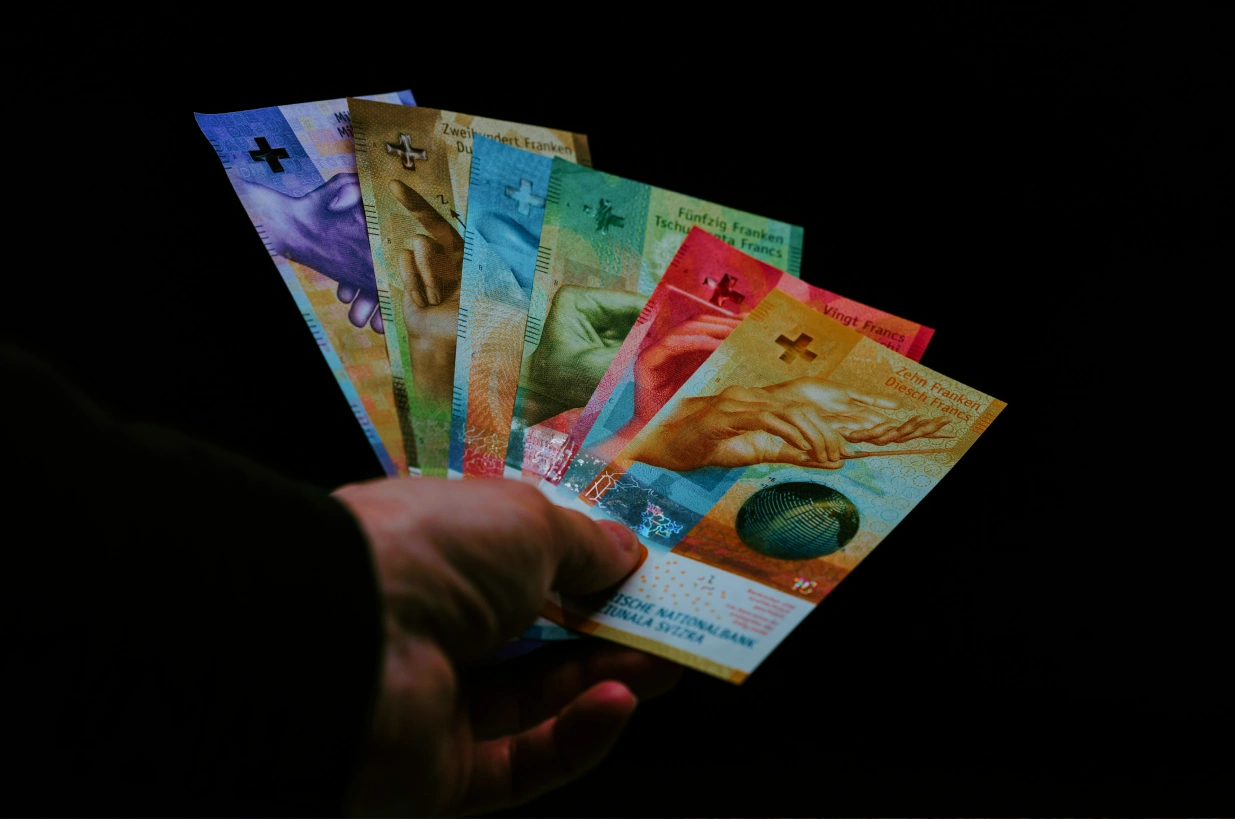
After Slovenia introduced constitutional protection for cash, Switzerland also confirmed in a referendum on March 8, 2026, that the status of the franc and the supply of cash are constitutionally entrenched.
Although citizens did not accept the original popular initiative titled 'Cash is Freedom', they supported the government's counterproposal by a convincing majority. This directly inserted the Swiss franc and the obligation of the Swiss National Bank to ensure the supply of cash into the Constitution, elevating this issue to the highest legal level.
Swiss voters had two options before them. The first was the more ambitious popular initiative, which required the state to guarantee a sufficient quantity of coins and banknotes at all times and that the franc must not be replaced by another currency without the direct consent of citizens and cantons. On the other side stood the more moderate counterproposal of the federal authorities, which followed the same direction but relied on more precise legal formulations.
The outcome of the vote removed all doubt. The popular initiative was rejected with 54.4% of votes against, while the government's counterproposal was accepted by a convincing majority of 73.4% of the vote. The Swiss thus rejected the broader demands of activists, but supported a solution that constitutionally ensures the presence of cash in the monetary system.
The adopted text does not introduce an automatic right to pay in cash in every situation, but it constitutionally entrenches two fundamental pillars of the system. The first is the official status of the franc as the national currency, and the second is the obligation of the Swiss National Bank to ensure the supply of cash. By this, the state decided that the availability of physical money should no longer be merely a matter of statutory regulation, but a permanent constitutional obligation.
Although these provisions already existed in legislation, raising them to a higher legal level ensures greater stability of the system. Any future amendment of these constitutional provisions would require a renewed decision by the people and the cantons, preventing their change by a simple parliamentary majority.
For the average citizen or visitor to Switzerland, this decision brings no immediate changes in shops. The federal authorities explicitly emphasize that the adopted proposal has no immediate practical consequences nor does it create a general right to pay in cash in every situation. Private entities, such as restaurants or shops, still retain autonomy in deciding on the methods of charging for their services.
Nevertheless, the political and legal weight of this act is significant. At the height of global digitalization, Switzerland sent a message that technological progress must not exclude physical money. Constitutional protection of the availability of cash has become a symbol of continuity and a guarantee that cash will remain an integral part of Swiss monetary identity.
Comparison with Slovenia often appears in public debates, but it is important to emphasize that the Slovenian and Swiss models are not identical. Slovenia introduced into its constitutional order a broader right to use cash, stating that everyone has the right to use physical money in banking transactions and general legal commerce. The Swiss model is narrower and focuses on the institutional framework, namely the constitutional entrenchment of the status of the franc and the obligation of the Swiss National Bank to ensure the supply of cash. Although the approaches differ, both solutions aim at the long-term preservation of the role of cash.
This referendum showed that the issue of cash goes beyond the technical aspects of payment methods and becomes a question of trust in state institutions. While digital wallets and apps are becoming ever more present, Switzerland decided that physical money must remain a constitutionally recognized option. This decision strengthens the place of cash in the monetary system and ensures that its availability remains a permanent obligation of the state.