

bank Germany
Bank Account and Finances in Germany
24.10.2024.
05/21/2024

If you live and work in Germany, you need a bank account. You can open an account at a bank or savings bank. Most banks and savings banks have branches. Many banks can only be used online. To open an account, you usually have to pay some money, a fee. Opening an account is free for pupils and students. There are different types of accounts: With a regular savings account (Guthabenkonto), you can only withdraw money that you have previously deposited into the account. With an overdraft account (Dispo), you can withdraw money even when you have no money in the account. The bank lends you money up to a certain amount. You must repay this amount to the bank with interest. Interest rates are often very high.
Do you want to open an account? You can do that at any branch. The bank or savings bank must always first verify your identity. So you must show your ID card or passport.
At many banks, you can also open an account online or by mail. For this, you can use the subsequent identification procedure (Postident): You will receive papers from the bank or savings bank. With the papers and your ID card or passport, you go to the post office. There they can identify you. To open an account, you sometimes also need your registration certificate.
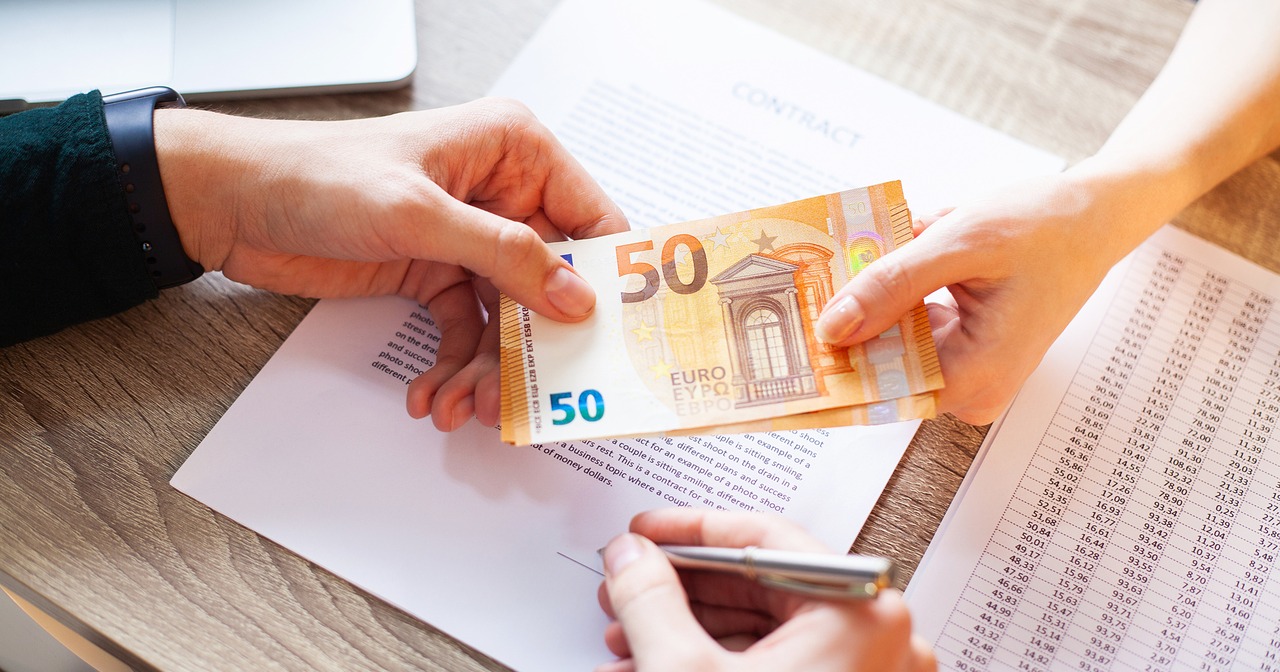
You need a checking account for rent and salary. Your employer pays your salary by bank transfer. You usually have to pay the rent for your apartment by bank transfer. For regular transfers, you can set up a standing order. For other transfers, you will receive a transfer form from the bank or savings bank. In the transfer form, you enter how much money you want to send and who should receive the money. You then submit the transfer form at the bank/savings bank. Do you want to send money online? When opening the account, say that you want to use online or home banking.
Since 2014, in 34 European countries (as of July 2018), there has been the so-called SEPA payment system, which enables fast money transfers (euros). In this system, the IBAN number replaces the account number, and the BIC replaces the bank details. IBAN and BIC are located on your EC debit card.
For your checking account, you will receive an electronic bank card (EC). If you want, you can also get a credit card (for example: MasterCard, Visa). You usually have to pay a fee for the credit card. The bank or savings bank sends you the electronic bank card (EC) and/or credit card by mail. You must sign the card. A few days later, you will receive the secret number for your card by mail, the PIN number. You must memorize the secret number.
With the electronic bank card (EC), you can withdraw money from all ATMs. For this, you always need the secret number. With the credit card, you can pay in some shops and on the internet. You can deposit cash at the branch of your bank/savings bank.
If your EC debit card is lost or stolen, it is important to block it as soon as possible by calling the number:
116116
For the money in your account, you receive interest from the bank or savings bank. For money in a checking account, you receive only low interest. If you want to save money, you can open a money market account or a savings account. In that case, you will receive somewhat more interest than with a checking account.
Source: goethe.de