

Adriatic season
Good Pay, Sun and Sea: Workers from Serbia and Bosnia Rush to Croatia
19.04.2025.
08/06/2023

ZAGREB – More and more foreign workers are coming to Croatia without being offered any prospects.
At the same time, constant declines in birth rates and labor shortages are being recorded. Why is there no political will to integrate foreigners?
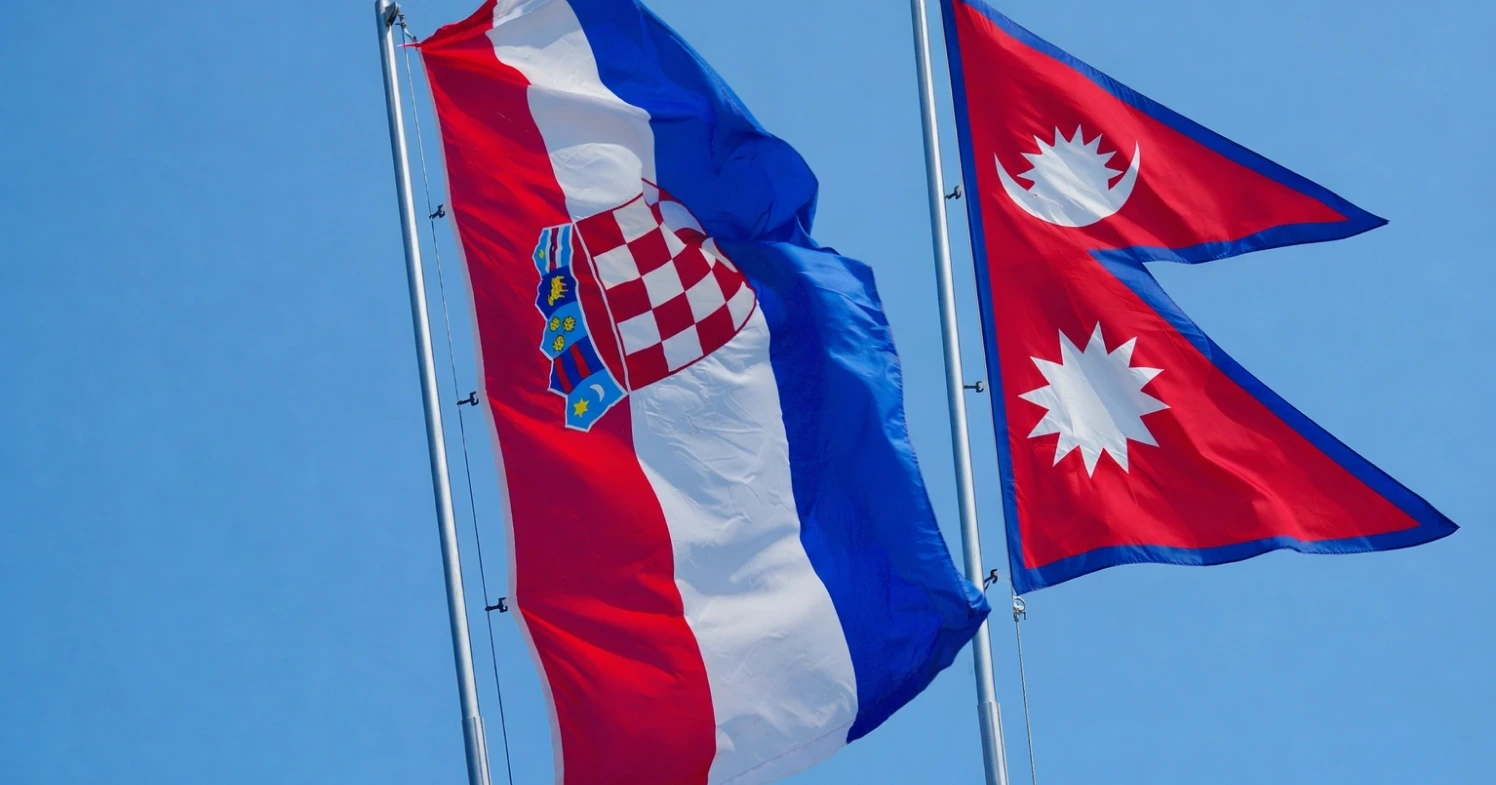
Croatia’s demographic picture is becoming increasingly bleak, as confirmed by the latest reports on population trends. Last year, not a single Croatian county had more births than deaths, and only four smaller towns could boast a different outcome. Yet as many as seven counties recorded at least twice as many deaths as births. Public reactions, both expert and general, have been framed accordingly, although no one has yet taken into account one entirely different trend. Alongside refugees from other continents, an increasing number of workers from Asia are arriving in Croatia, for example from Nepal or the Philippines.
The Croatian labor market today counts more than 150 thousand active immigrants, a large share of whom are precisely of that origin. The clear fact, therefore, is that these very people are changing Croatia’s demographic picture in the long term, but apparently few care. Their living and working conditions or chances of staying, and of bringing their families and, ultimately, their overall social position, are very rarely commented on publicly. They themselves, in the rare media opportunities when they can, generally express a desire to stay permanently.
Still, the state’s lack of preparedness for strategic solutions will certainly come at a cost after some time has passed and the population in question grows significantly. That the biggest problem of demographic strategies in Croatia is poor implementation of measures for systematic and sustainable revitalization was pointed out to DW by Drago Župarić-Iljić from the Faculty of Humanities and Social Sciences in Zagreb.
This sociologist and analyst with a special focus on migration and refugees notes that there is no proactive vision for the development of Croatian territory and population that would include permanent immigration and naturalization of foreigners from non-European areas. “Also, there is no visible political will,” he added, “to even remotely see in this the potential for demographic recovery and economic progress. Instead, because of all our fellow citizens who have emigrated, and in line with the needs of the emptied Croatian labor market, chaotic immigration is being allowed through intermediary agencies, with often exploitative practices and precarious working conditions.”
In that context, in Župarić-Iljić’s opinion, even the two basic needs of foreign workers seem like difficult goals to achieve. First, that in the future they can count on approval of permanent residence, and then also on bringing their families:
“This also limits the chances for real integration and very likely contributes to further secondary movements of foreign labor from Croatia toward Western Europe. The political elites’ ‘wet dream’ of the ethnic monolithicity of the nation, which was supposed to be realized through returnees from the diaspora, repeatedly proves misguided and unattainable, as does the myth of Croatia’s competitiveness in the eyes of digital nomads.”
The same applies to the hoped-for arrival and stay in Croatia of a larger number of Ukrainians who are closer to the dominant linguistic-cultural matrix.
“Unfortunately, the same neglect of a crucial question for this society can be expected in the future as well: how to make the option of staying become the primary choice and solution for many who here only want to work honestly, live, and raise children, but because of an incompetent and poor state administration, corruption, and crime, feel trapped, like strangers in their own country,” this sociologist returned to the issue of Croatian citizens themselves, hundreds of thousands of whom have left the homeland over the past ten years.
In a conversation with political scientist Vedrana Baričević, we are reminded that until just a few years ago Croatia had very restrictive labor policies for non-citizens. Workers came predominantly from the region, that is, from countries created in the territory of the former Yugoslavia, but which today can no longer meet the needs of the Croatian labor market. She agreed with the observation that for now there are no signs that at the level of politics or society there is any thinking about longer-term issues such as the integration of these people. At the same time, this is a process already seen in various countries of the European Union’s (north)west.
“It is not impossible that in Croatia their integration will remain a sore point as it has proven to be in some segments. For example, in the area of asylum policies. In addition, states may also have the motivation to keep workers in a position of dependence and social isolation. Namely, low-skilled labor is regularly sought for those jobs undesirable to the domestic population,” this political scientist from Zagreb’s Faculty of Political Science told us, further warning of the EU legal norm of recognizing greater rights for foreign workers.
Because after five years they should be granted permanent residence and further integration, but that permit also implies the freedom to seek employment and change employers, as well as freedom of movement, especially within the EU. “To that extent, integration policies,” Baričević continued, “are often pursued with fairly ambivalent goals: immigrants are expected to socially integrate or even assimilate, but they are also often kept for a long time in a position of social isolation and legal insecurity in order to meet labor market needs.”
“What is certainly clear is that without decisive integration policies that also include the issue of language, education, family reunification, and the like, it is not possible to speak of creating stable living conditions for the people who arrive. Still, that is a political decision. There are a number of good practices that can be adopted, but for this to be considered at all, integration must be set as a long-term goal,” she concluded, pointing to the possibility that pressure from the market and labor shortages could push Croatia toward more attractive immigration policies.
But for now these are only assumptions and projections based on the experience of other environments, and it certainly would not hurt to keep in mind the history of Croatian citizens emigrating in search of a livelihood. Many of them left without a clear plan other than work and earnings, even on the same continent, but a large number of them then stayed permanently in Germany, Austria, Switzerland, and Sweden. Today’s immigrants in Croatia often want the same for themselves and their families, except that no one officially asks them anything about it, nor takes it into account.
Vedrana Baričević therefore finally told us that the public, that is, society through its pressure on the state, could also help in better shaping public policies for this issue. Circumstances are changing practically overnight, and soon it will be possible to properly direct the corresponding relations only with much greater effort than is necessary at this moment.
Source: seebiz.eu