


Croatia pensions
Croatian Pensioners Announce Fight: 'The Government Is Taking Half Our Pension, It's Shameful!'
14.07.2025.
02/03/2026
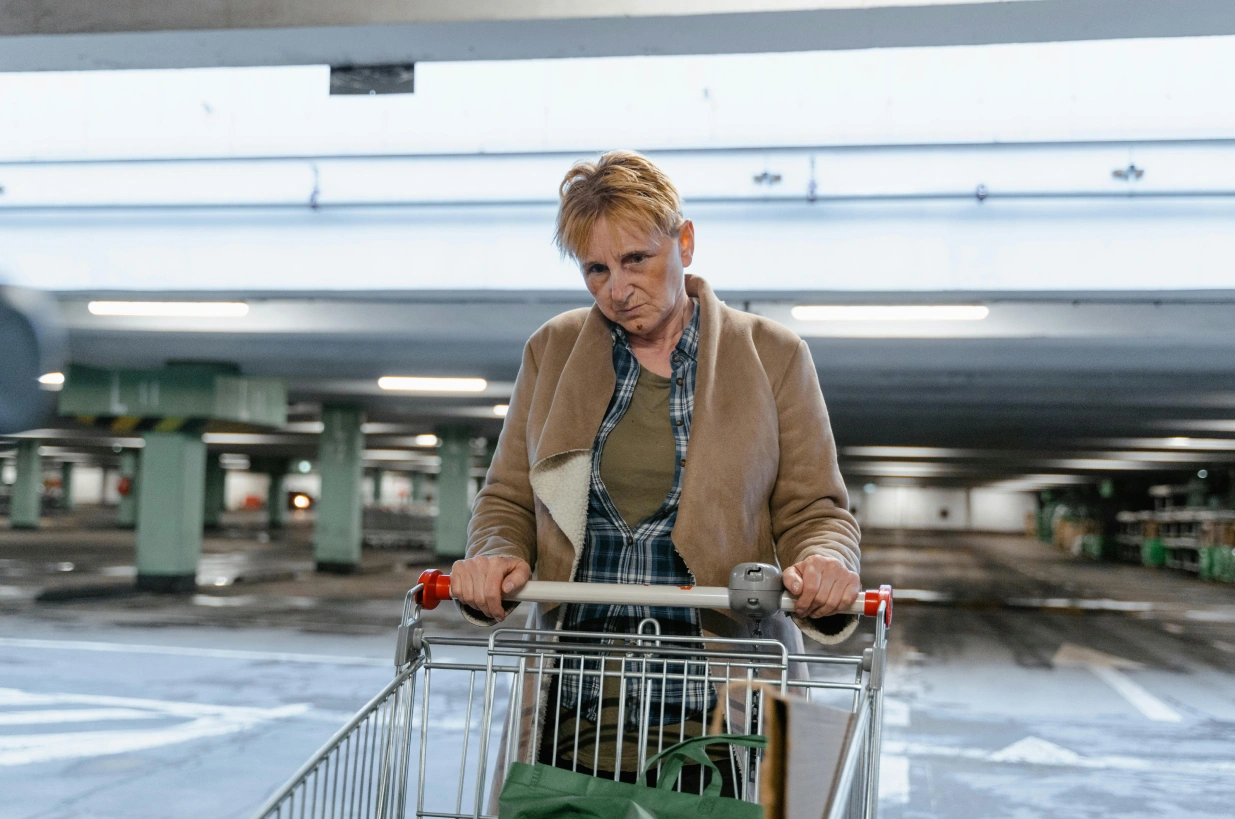
Imagine receiving a bill for living every month amounting to 100 euros, while you only have 60 in your wallet. Who will pay the remaining 40? No one knows, but that is exactly what the financial picture of the average Croatian pensioner looks like.
According to the latest DataPulse Research analysis, which examined pension systems in 30 European countries, Croatia has ingloriously landed at the very bottom. The research compared how much the state old-age pension can actually cover the real living costs of older citizens, and the conclusion for our pensioners is devastating.
The numbers are relentless and, honestly speaking, quite uncomfortable. The analysis shows that the average pensioner, that is, the recipient of a state gross old-age pension in Croatia annually receives around 5,600 euros in pension. On the other hand, it is estimated that for living, food, utilities, housing, and basic needs, in that same year they need around 9,300 euros.
When this is put on paper, we arrive at the painful percentage, the pension covers only about 60% of the costs. That 40% 'gap' remains empty.
Put simply, the state pension in Croatia is no longer enough for an independent life. It is not a 'golden age,' but at best a foundation that must be built upon somehow in order to survive. But how?
If you are wondering how our people survive with that deficit, you probably already know the answer from the stories of your parents or neighbors.
The analysis clearly suggests that nowhere in Europe is the state pension intended as the sole source of income, but here that gap is drastic. In practice, the 40% shortfall is made up in various, often painful ways. Those who were lucky enough to save something are now spending it, while more and more pensioners have to work part-time or full-time. Children and grandchildren often help by paying utilities or buying groceries. The most common and saddest method is deprivation: home repairs are postponed, heating is reduced, and a visit to a private doctor becomes unattainable.
It is interesting to see who is at the other end of this ranking. While we count every cent, in four European countries the average state pension is actually higher than the estimated cost of living. These are Spain, the Czech Republic, Poland, and Romania.
Pensioners there are, statistically speaking, in the black. Close to 'breaking even' are Bulgarians and Danes, where pensions lag behind costs by less than 10%.
Croatia is, unfortunately, among the countries with the largest deficit, and right on our heels are Slovenia, Hungary, and Norway. Although Norway is a specific case due to extremely high living costs, despite high pensions.
Why is this ratio so dangerous for our pensioners? Because, according to the data, the largest share of money in old age goes to two items that cannot be done without: housing with utilities and food.
These are not luxury expenses that you can simply cross out. You cannot stop eating or stop paying for electricity. That is precisely why, every time food or energy prices rise, pensioners with this kind of income-to-cost ratio are the first to feel the blow. Their budget has no 'breathing room' to absorb price increases.
To avoid any confusion and misinterpretation, DataPulse Research notes several important things. What is being compared here are gross amounts of state pensions, that is, what the state pays out, and not necessarily what lands in the account after all deductions, although pension taxation here is specific, and the estimated living costs are based on Eurostat data.
Also, this is a statistical average. That does not mean that every pensioner is missing exactly 40%, but rather that the system at the level of the whole country generates such a result. Someone's personal situation may be better, but unfortunately, for many it is even worse.
The message of this analysis for Croatia is a clear warning. The figure of a 40% shortfall is not just a statistic, it is a diagnosis of a system in which the state pension no longer guarantees security, but struggle. For those who are only heading toward retirement, this is a signal that they cannot rely on the state completely. For those who are already in it, it is only a confirmation of what they feel every time they go to the store.