

AMJobs GmbH production
Jobs in Austria: Production Workers Wanted with Salaries up to €2,500 and 14 Annual Payments
22.05.2026.
06/16/2025

Original photo: Ben Bender / CC BY-SA 3.0, adapted for article format
Austria has in recent years quietly, but decisively, taken on the role of one of the most desirable European destinations for workers from Southeast Europe.
And while for decades Germany and its industrial regions were the first choice for those from Croatia, Serbia, Bosnia and Herzegovina, North Macedonia, but also Albania, Bulgaria, Kosovo, Montenegro and Slovenia seeking a secure salary and a European standard of living, the Austrian labor market today is attracting a growing number of skilled and auxiliary workers from precisely those countries.
Rich job offer
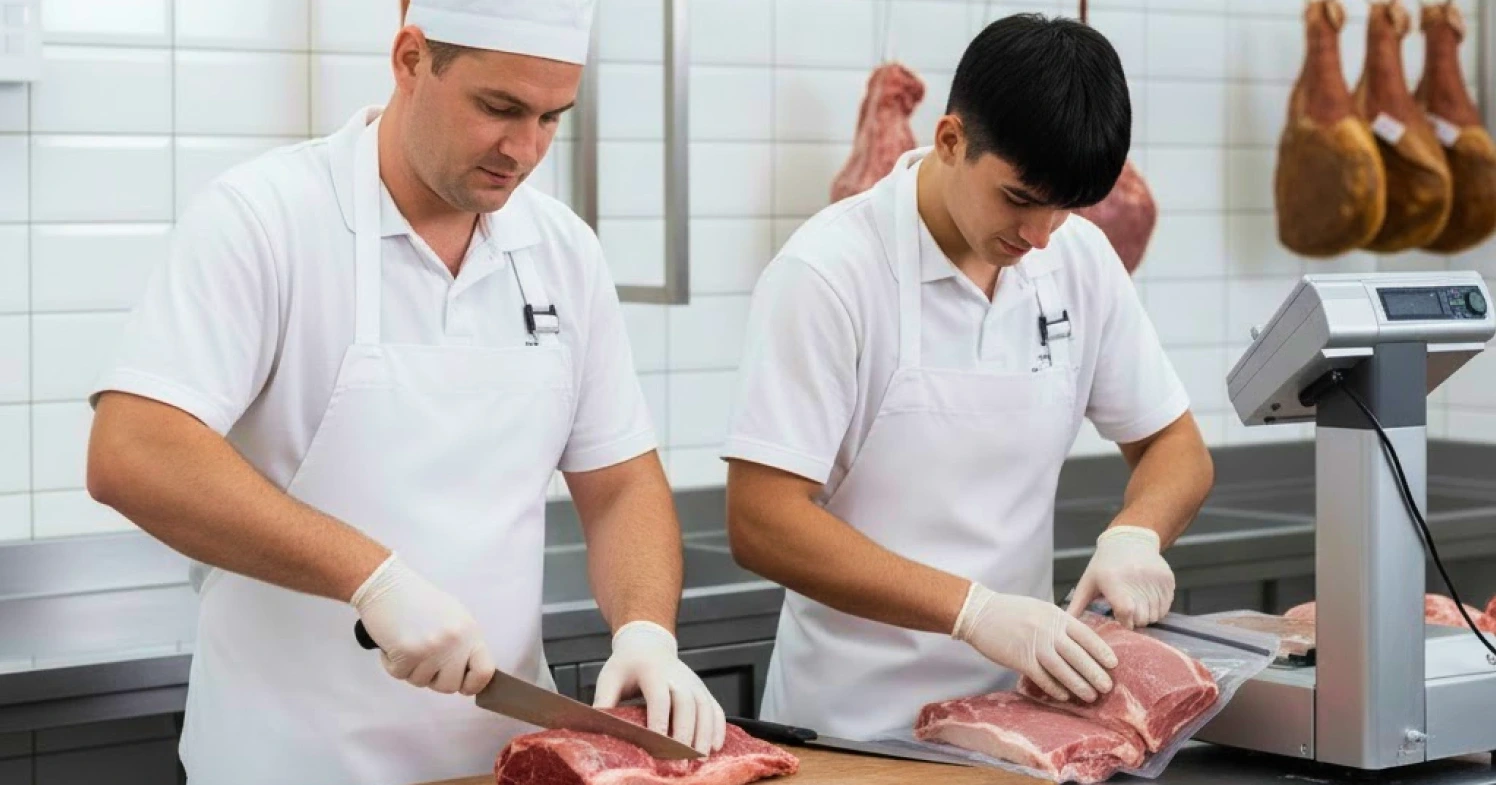
If you are looking for a new job, you can see job offers in Austria that include manufacturing, food industry, warehousing, construction, automotive industry, electrical installations, mechanical engineering, metal and wood industry here: https://raditi.eu/?country=AT.
Austria compared to Germany
Austria has several advantages over Germany that are especially attractive to workers from the region.
Austria is specific in that it pays almost all employees 14 salaries per year, with additional payments in June and December increasing annual net income by about 15 percent on average. Thus, for example, a worker with a net salary of 2,000 euros - earns almost 4,000 euros more per year than would be the case in most other countries. In Germany, 13th and 14th salary payments are not standard.
In addition, the 13th and 14th salaries in Austria are taxed at more favorable rates (the first €620 is tax-free, and the remaining amount is taxed at 6% - 27%), which further increases the profitability of working in this country.
Austria is not only financially attractive, it also offers a high level of security, excellent public transport and healthcare system, and Vienna has for years been at the top of global quality-of-life rankings. Most Austrian cities have developed migrant communities, which makes integration and finding one’s way in a new environment easier. In large cities such as Vienna, Graz and Linz, free German language courses for newcomers are often organized, which is a major advantage for faster adaptation. Multiculturalism has become a hallmark of Austrian cities, more than 10 percent of residents are foreigners, and among them are more than 300 thousand people from the countries of the former Yugoslavia and the wider region, including Albania and Bulgaria.
When it comes to breaks during the working day, Austria and Germany have almost identical rules; in both countries, a worker who works longer than six hours has the legal right to at least a 30-minute break, which can be divided into shorter parts (in Austria no part may be shorter than 10 minutes, and in Germany than 15 minutes). As a rule, the break is unpaid and is not counted as working time, unless a collective agreement or the employer’s internal regulations provide otherwise, so it is important to check exactly what is written in your employment contract.
Workers in Austria often have a shorter probation period. It usually lasts one month, while in Germany the standard is six months.
This country offers more vacation days, which further contributes to a better work-life balance. Workers enjoy at least five weeks of annual leave, with the possibility of additional days after many years of service. It also has more public holidays than most European countries.
Close to home
Particularly interesting is the proximity of Austrian cities such as Graz and Vienna to the countries of the region; traveling by car from Zagreb to Graz takes only two hours, and a round trip is cheaper and shorter in time than to the nearest German metropolises. For workers who travel home twice a month, this means significant savings in money and time, but also a higher quality of life.
Additional benefits
Employers are increasingly offering “all-inclusive” packages, where in addition to salary workers receive accommodation, meals, and help with administration, which further reduces relocation costs and makes the first step in a new country easier.
Bureaucracy
Austria offers excellent opportunities for professionals in shortage occupations, faster and simpler bureaucracy for obtaining work permits, as well as proximity to the homeland, which makes frequent family visits easier.
For citizens of the European Union, including Bulgaria, Croatia and Slovenia, access to the Austrian labor market is extremely simple; it is enough to register residence and prove employment or means of subsistence, without the need for additional permits.
Citizens of Albania, Bosnia and Herzegovina, Kosovo, North Macedonia, Montenegro and Serbia, although they go through the Red-White-Red Card system (a points-based model that evaluates education, language and experience), in practice are increasingly encountering fast and efficient procedures, especially for shortage occupations.
Austrian bureaucracy, known for its precision, functions almost without obstacles for workers from the EU, while for others employers often take over the entire administration, from appointments at the consular office to accommodation reservations.
Main disadvantages
Still, not everything is ideal. Housing costs in larger cities can be high, and the language barrier and the process of social integration represent real challenges, especially for those who do not speak German.
However, Austria has proven to be a country that understands the needs of workers from the region; proximity to the homeland, the possibility of regular returns, competitive salaries and stable conditions make it a logical choice for all those who want to combine a European salary with a sense of closeness to home.
Posted EU workers in Austria
The situation for posted (seconded) workers in Austria is clearly regulated by European and Austrian legislation. When your employer from Croatia or another EU country temporarily sends you to work in Austria, you remain employed by the parent company and continue to receive your salary and be socially insured in the country from which you were posted, which is proven by the A1 form (in Croatia it is issued by the Croatian Pension Insurance Institute, at the request of the employer or self-employed person).
During work in Austria, Austrian rules on minimum wage, working hours, minimum annual leave and all other mandatory working conditions prescribed by laws or collective agreements apply to you, even if they are more favorable than those in the home country. This means that you are entitled to at least the same salary, leave and supplements (including the 13th and 14th salary) as Austrian workers in the same workplace, and daily allowances and travel expenses are not included in the calculation of the minimum wage except in exceptional cases.
Posting can last up to 24 months, and for a longer period it is possible to request an extension with the consent of both countries. You do not need a work permit or special recognition of qualifications, but you are required to register residence in Austria if you stay longer than three months, and all work documentation must be available at the construction site or workplace, in German or translated. A posted worker in Austria has a high level of protection and rights, but also the obligation to comply with Austrian labor and wage regulations.
Moving the whole family
For many workers from Albania, Bosnia and Herzegovina, Bulgaria, Croatia, Kosovo, North Macedonia, Montenegro, Serbia and Slovenia, Austria today is not just a temporary address, but a place where a balance can be found between professional success and private life, with security, stability and a human scale that is often lacking in other European metropolises.
For those arriving with family, Austria offers the possibility of family reunification through the Rot-Weiß-Rot Karte Plus, which means that spouses and children can gain free access to the labor market and the school system. Also, Austrian employers are increasingly helping with paperwork, accommodation and integration, and information and support can also be found through official guides for newcomers.
It is important to know that most administrative processes can be prepared online in advance, but it is advisable to arrive with translations of all important documents (diplomas, certificates of work experience, birth certificates), preferably certified.
A new job in Austria awaits you
If you are looking for a job in Austria, you can apply via the link: https://raditi.eu/?country=AT.