




Croatia Reddit
Young Croatian Earning an Above-Average €2,300 Salary Asks What to Do With Extra Money
08.01.2026.
03/30/2026

On paper, Croatia has never seemed more successful than it does today as billions of euros from European funds pour into roads and the reconstruction of cities.
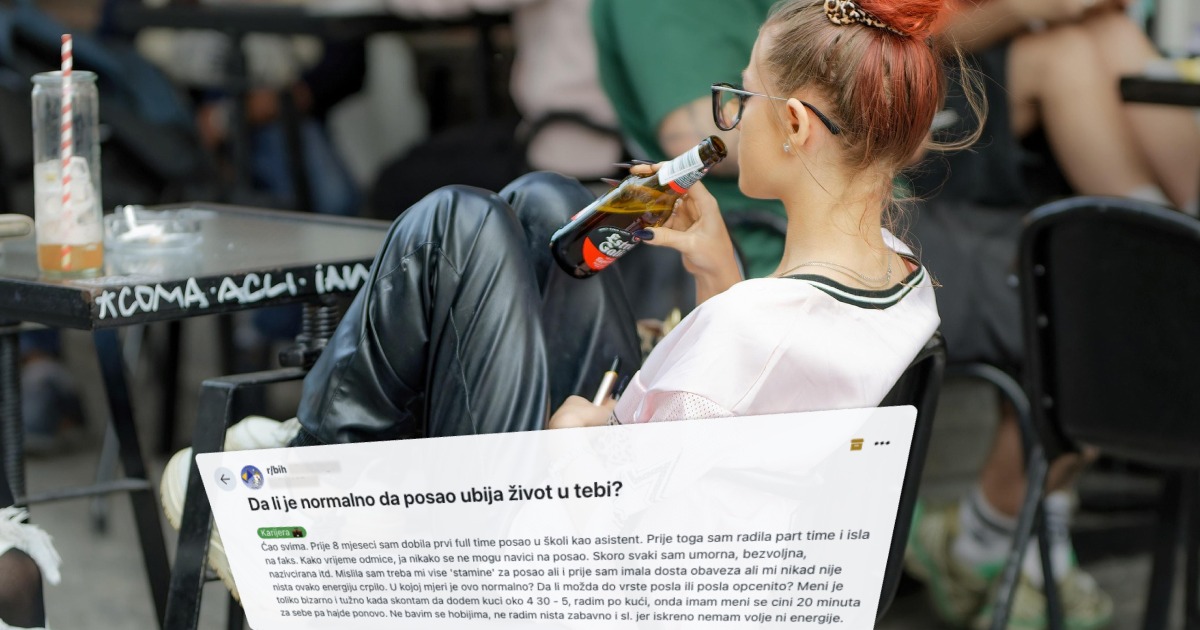
However, behind that dazzling facade lies deep dissatisfaction among those who are supposed to turn those figures into bread and a roof over their heads. It is precisely the popular platform Reddit that has become the main meeting place for citizens who refuse to accept the imposed narrative of general prosperity. A user named del5000 triggered an avalanche of comments with the simple question of whether it is a myth or the truth when we say that the standard of living is at its peak, noting that it seems to him that life was easier in 2015 than it is today in 2026.
The author of the post, del5000, directly pointed to the absurdity of the modern labor market in which ninety percent of advertisements relate to salespeople and assistant jobs. His message is clear because he believes that finding a normal office job has become almost impossible, and even if one is found, the salary is shamefully close to the minimum wage along with exhausting rounds of testing. With a dose of disbelief, he notes that it is inconceivable to today’s young people that their parents and grandmothers were building houses and starting families in their twenties without fear of the future.
A harsh confirmation of these claims was also presented by a user from Split who described his humiliating experience from a job interview at a large global consortium. Despite having thirteen years of experience in the profession, he was offered a contract for only thirty days with a salary that was current three years ago. 'Our employers are vaccinated against reality, I could write a book about it,' says the bitter worker whose quote best illustrates the gap between corporate reports and the real purchasing power of workers.
It is precisely the opinions of these people from first-hand experience that refute the optimistic reports that regularly fill the media space and political speeches. While official data speak of historically low unemployment and rising average incomes, voices from the field warn of a decline in quality of life for anyone who does not have inherited property. The irony is all the greater because GDP growth is celebrated while at the same time the number of those who cannot afford even basic independence is growing, and sarcastic comments online say that statistical data are like expensive perfume, they smell nice to those who wear them, but they feed no one.
One of the most painful points of the discussion is the impossibility of resolving the housing issue, which used to be a basic standard. Del5000 asks the rhetorical question of whether a young married couple today can buy land in the Split neighborhood of Mejaši and build a house according to the principle of 'as many children, as many floors.' For most, the answer is devastating, and participants in the discussion add that today in Croatia the difference between the rich and the poor is actually inherited real estate.
This paradox is further intensified by the fact that apartments used to be obtained through housing fund systems into which everyone paid. Although that system was not perfect, today’s system of commercial loans and astronomical prices per square meter has made owning a home an unattainable dream for highly educated people. It is sarcastically noted that today employers give a salary of 1,000 euros and expect gratitude, and if the worker complains, they quickly get the answer: 'If you won’t, there’s a Nepali who will.' Every objection is cut off with the argument of cheap imported labor.
Although economic topics prevailed, a significant part of the discussion concerned the subjective feeling of security that is often neglected when assessing quality of life. Many pointed out that nostalgia for the past is often mixed with selective memory. Older generations recall times when break-ins were a normal occurrence, and open mafia clashes with axes and firearms in front of nightclubs were part of everyday folklore.
One of the participants vividly describes the former situation by stating that in some cafes glasses were tied with steel wire so that guests could not break them or stab someone. Today’s crime, according to the general opinion, has moved to a higher level where thefts are carried out with paperwork and in offices, while the streets are incomparably safer than in the 1990s. This is one of the rare segments in which the majority agrees that progress is real and tangible.
Therefore, despite economic pessimism, citizens recognize progress in the domain of general security. Nostalgia for past times often overlooks the high rate of crime and street violence that marked the 1990s. Today’s Croatia is an incomparably calmer place to live, where mafia clashes with axes or firearms in front of nightclubs have become a thing of the past. It is common knowledge that Croatia remains one of the few European countries where children can safely play in the street until late evening hours, which is a value that cannot be expressed in euros.
Croatia in 2026 lives in a kind of split personality. The state has visually transformed into a modern European member with top-tier infrastructure, but the price of that transformation has been high for the average citizen. The question posed by del5000 is not just 'whining' on the internet, but a deep diagnosis of a society in which statistical growth is not accompanied by personal well-being.
We have reached European prices, but we have retained the rigid mentality of employers from the last century. As long as the country’s success is measured exclusively by kilometers of new roads, and not by the ability of a young person to buy a roof over their head through honest work, the thesis of 'the best life ever' will remain only an empty phrase in pre-election brochures. The future belongs to those who recognize that the standard of living is not measured only by numbers, but by the dignity of every individual.