

Germany Western Balkans
Employers Concerned: Germany Plans to Halve Number of Workers from the Western Balkans
27.08.2025.
02/06/2023

The German government is planning to double the number of people from Western Balkan countries who will be able to obtain a work visa regardless of qualifications. What does this mean for the labor market in Germany? Trade unions fear cheap labor.
Pressed by what has now become a chronic labor shortage in the country, the German government is planning to liberalize legislation on labor migration, and part of that package is the so-called “Western Balkans rule”. Two important changes are envisaged here: on the one hand, the limitation of this measure's validity until the end of 2023 should be abolished – in the future it should become a permanent rule. On the other hand, a doubling of the quota for labor immigrants from the Western Balkans is envisaged – from the current 25,000 annually to 50,000 in the future.
The “Western Balkans rule” was introduced after the large refugee wave of 2015 and 2016. With it, two problems were meant to be solved in one move: preventing the uncontrolled arrival of asylum seekers and at the same time easing the labor shortage.
In those years, more than a million refugees arrived in Germany, primarily from Syria, but also a large number of people from the Western Balkans region – from Albania, Bosnia and Herzegovina, Kosovo, Montenegro, North Macedonia, and Serbia. While Syrian war refugees were generally granted asylum quickly, economic migrants from the Western Balkans had little chance of success: only about five percent received that status.
Satisfied employers
The introduction of the Western Balkans rule enabled regulated and facilitated immigration of unskilled or semi-skilled labor from those countries – those with high qualifications can come to the country anyway within other programs. One of the conditions for this is that the application for a work permit must be submitted at German missions in those countries, and another is that no asylum application had previously been submitted.
These planned changes are – expectedly – welcomed by employers' representatives. After all, they are the ones exerting permanent pressure on the government to liberalize the conditions for the immigration of the labor force they lack.
Fear of dumping
The German Trade Union Confederation (DGB) is more cautious here. They too welcome labor immigration, says Evelyn Räder, a member of the DGB executive board, but she emphasizes that the question of framework conditions for workers from Western Balkan countries is very important.
“People who come are largely dependent on the employer they work for. Their residence permit is tied to their job. This causes fear among people that they will be sent back if they are not obedient,” says Räder. In addition, they often do not speak German and are not informed about their rights. All this in practice leads to these workers accepting working conditions that are worse than those prescribed by law – and thus to dumping on the labor market, Räder emphasizes.
Not “experts”, but “workers”
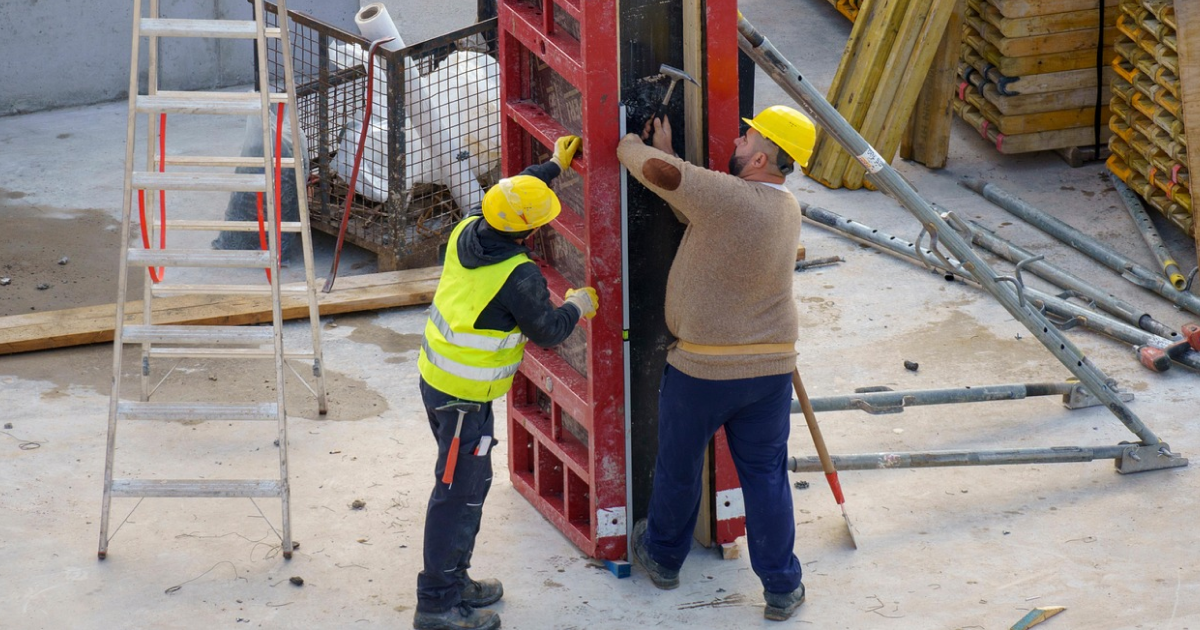
According to data from the Institute for Employment Research (IAB), by the end of 2020 the Federal Employment Agency (BA) had issued 260,000 preliminary approvals and 98,000 work visas to workers from Western Balkan countries. Three quarters of workers from those countries work on construction sites, in gastronomy, and in the care of elderly and sick persons – 44 percent in construction alone. To a large extent, these are auxiliary jobs with relatively low wages.
Although the government explains the reform of labor legislation regarding foreign workers by the need to counter the shortage of skilled labor in the country, the Western Balkans rule deviates from that: within this framework, no qualifications are required to obtain a work permit. According to the DGB's assessment, this is not about attracting “experts” at all, but about bringing in workers for simple jobs. “This is a program for bringing in workers according to employers' wishes. They can take them when they need them, but they can also easily get rid of them when it suits them,” says Räder.
Precariat on construction sites
This is particularly pronounced in construction. German construction associations last year canceled the extension of the collective agreement that had been in force for decades. Workers can now be paid the legally guaranteed minimum rate of 12 euros per hour, which is less than the previous hourly wages that on construction sites averaged between 13 and almost 16 euros.
In this way, employers can put pressure on anyone seeking higher pay – there are always cheaper workers available. At the same time, they do not have to fear complaints: workers from the Western Balkans are a particularly vulnerable group, are not familiar with their rights, and for many even these worse working conditions are acceptable because of the situation in their home country. On top of that, effective controls by the state effectively do not exist.
Protection of workers – and collective bargaining autonomy
“We fear that in this way pressure is being created on the working conditions of all employees in construction. This makes it more difficult to conclude quality collective agreements, and without them this is simply a dumping program for reducing wages,” warns Evelyn Räder from the DGB.
The German Trade Union Confederation sees the solution in additional amendments to the Western Balkans rule, which the government should discuss at its session on March 1. One of the most important concerns facilitating the possibility of changing employers without the necessity of resubmitting an application for a work permit – as applies to other foreign workers.
According to the current regulation, the application for a work visa must be submitted in the worker's country of origin and the visa is ultimately granted for a specific job. If one wants to change it, that is possible, but it is necessary to reapply to the Federal Employment Agency. For the vast majority of workers, this is complicated or they do not even know about it – and the outcome is uncertain.
In addition, the unions are also demanding that employment on the basis of the Western Balkans rule be allowed only where collective agreements exist. In this way, on the one hand the workers themselves would be protected, and on the other collective bargaining autonomy of the unions as well.
Evelyn Räder from the DGB also has a clear message for those in the countries of the Western Balkans who are looking for work in Germany: “Inform yourselves about your rights, and if necessary, seek help. You do not have to accept everything that is offered to you, workers here have guaranteed rights.”
Source: dw.com