


economy Croatia
Croatia’s Annual Economic Growth Rate Nearly Twice the European Average
05.12.2025.
10/15/2026

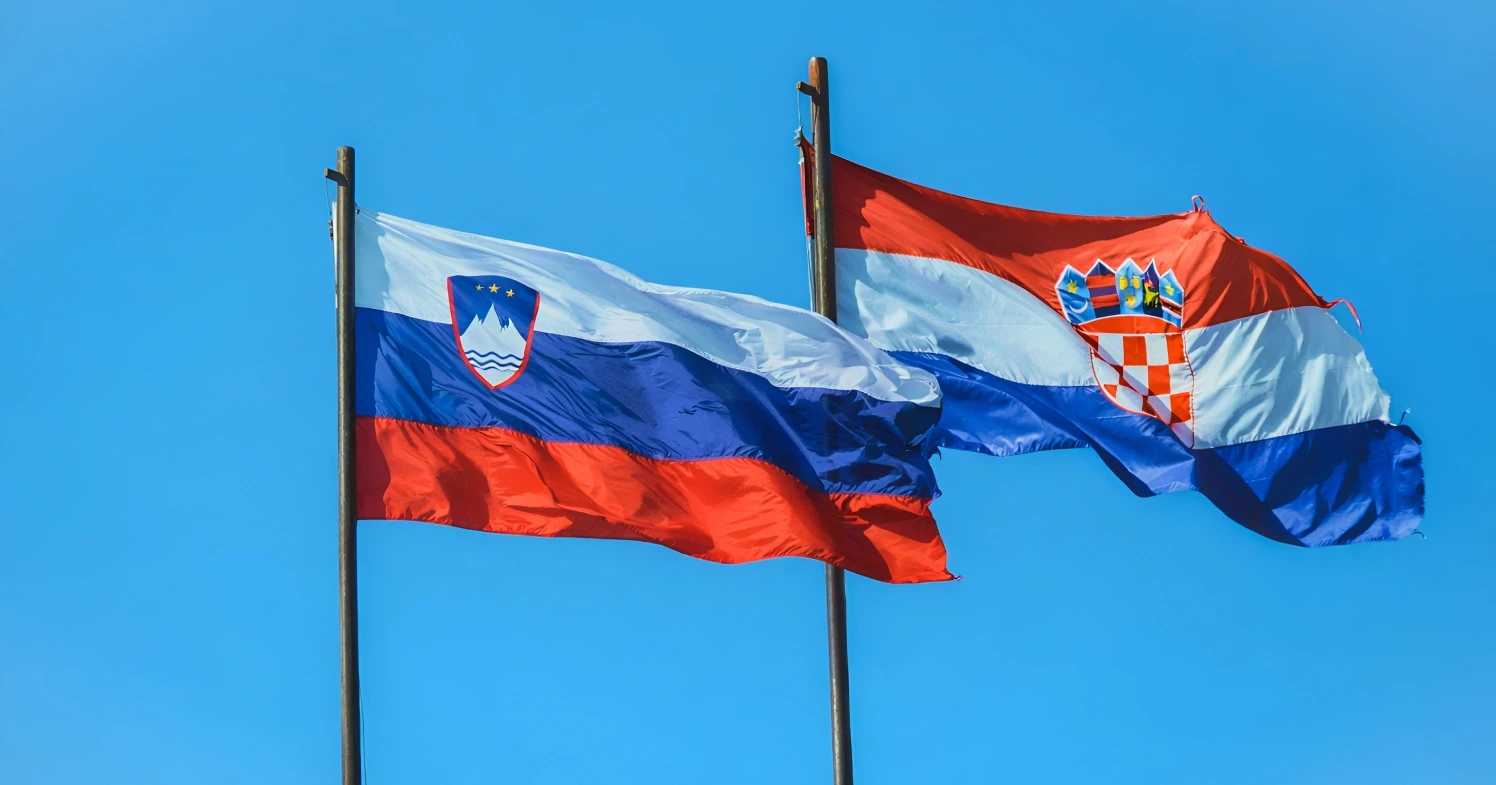
The International Monetary Fund (IMF) has published new economic forecasts that bring different expectations for Croatia and Slovenia.
While Slovenia is forecast to see significantly stronger growth than expected in the spring, the forecast for the Croatian economy has been lowered again. According to the latest IMF report, published on October 13, the Slovenian economy should grow by 3.2% this year, and the Croatian economy by 2.2%.
The difference in expected growth rates thus amounts to 1 percentage point in favor of Slovenia. Back in April, the IMF forecast that the Croatian economy would grow faster than the Slovenian one, but the new estimates now show the opposite relationship.
In April, the IMF predicted that Croatia’s gross domestic product (GDP) would grow by 2.6% in 2026. According to the October forecast, growth should amount to 2.2%, which is a reduction in expectations of 0.4 percentage points.
The forecast for 2027 has also been lowered. Instead of the previously expected 2.6%, the IMF now predicts growth of 2.3%.
For comparison, the Croatian economy grew by 3.4% in 2025, according to the Fund’s latest estimate. This means that slower economic growth is expected this year and next year than last year.
However, a weaker forecast does not mean that the economy will shrink. Croatia’s GDP should continue to grow, but more slowly than previously expected.
Unlike Croatia, the IMF has noticeably improved Slovenia’s economic outlook. In April it predicted growth of 2%, and now it expects 3.2%, or 1.2 percentage points more.
The improved forecast comes after several previous reductions in expectations for the Slovenian economy. A similar turnaround has already been announced by domestic economic institutions.
Slovenia’s Institute of Macroeconomic Analysis and Development expects growth of 3.8%, while the Chamber of Commerce and Industry of Slovenia has raised its forecast to 3.3%.
According to the assessment of the Slovenian Chamber of Commerce, stronger investment, a recovery in industrial production, and export growth are contributing to the improvement in economic results. Investments in the pharmaceutical industry, vehicle production, and infrastructure projects stand out in particular.
Alongside slower economic growth, Croatia is also facing higher expected growth in consumer prices.
For Croatia in 2026, the IMF forecasts inflation of 4.5%, which is 0.1 percentage points higher than the spring forecast. For 2027, it expects a slowdown to 3.3%, but that is also higher than the previously forecast 2.7%.
In Slovenia, inflation should amount to 3.5% this year and 2.5% next year. There too, forecasts have been raised compared with April, primarily due to more expensive energy products and other costs.
This means that for Croatia this year, the IMF expects both slower economic growth and higher inflation than in Slovenia.
Despite weaker forecasts, the Croatian economy should grow faster than the euro area average.
The IMF expects the euro area economy to grow by 1.1% in 2026 and by 1.2% in 2027. Growth continues to be adversely affected by high energy prices and weak consumer confidence.
At the global level, the forecast is more favorable. The IMF expects global economic growth of 3.1% in 2026 and 3.4% in 2027, with a warning that conflicts, more expensive energy products, and uncertainty in financial markets pose significant risks.