

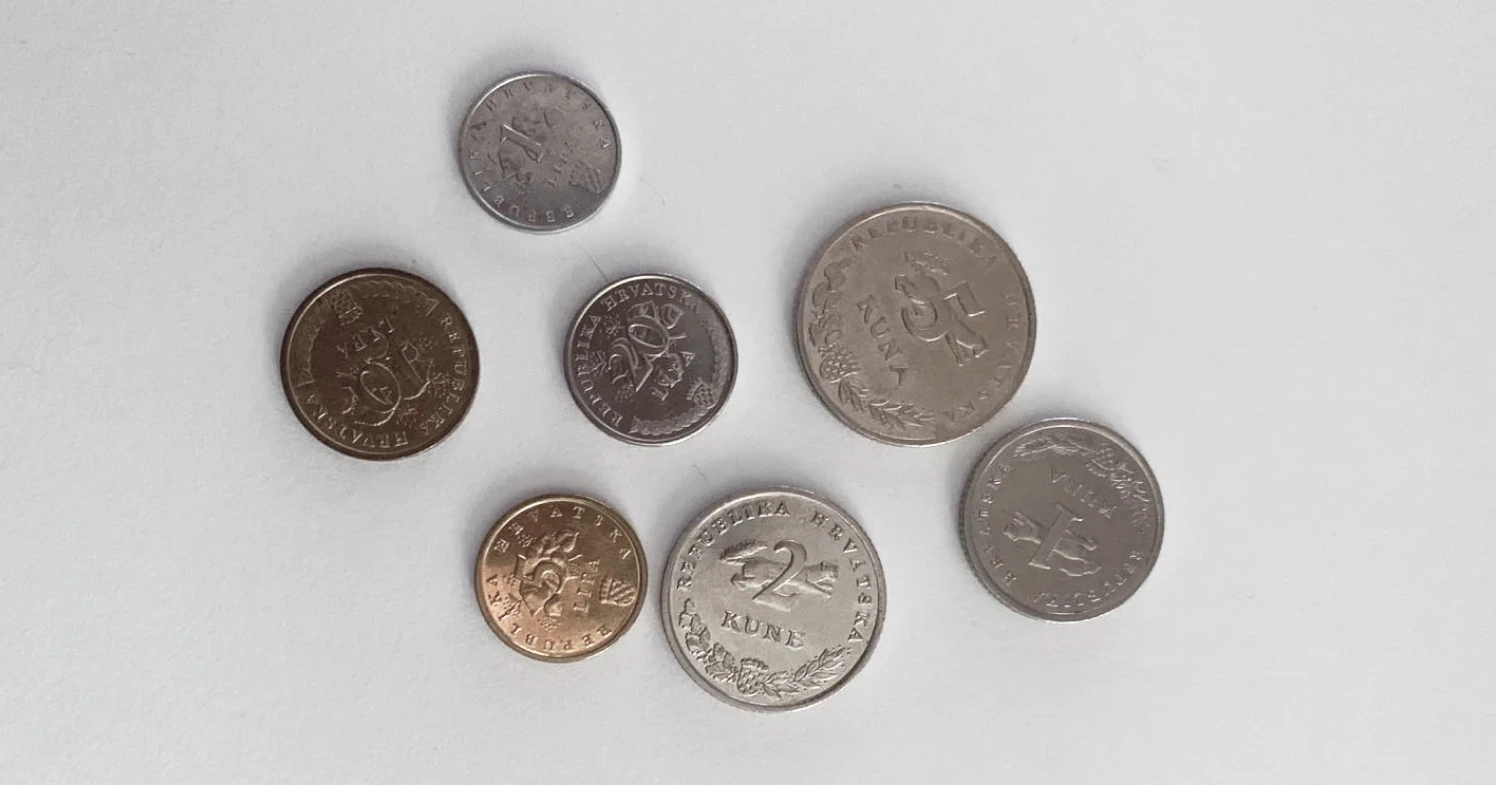
euro kuna
Experts Reveal: What Would Happen If the Kuna Returned to Croatia?
13.10.2025.
09/08/2025
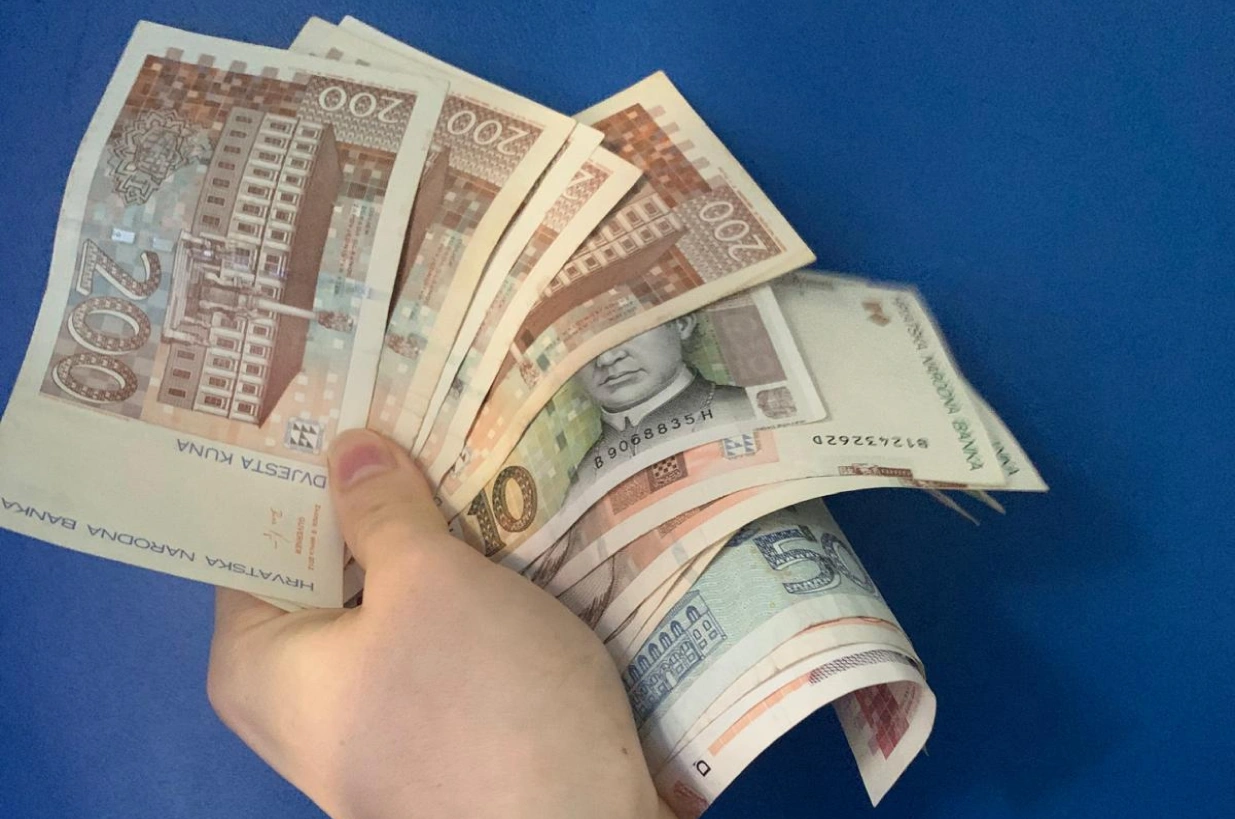
Most launched an initiative to bring back the Croatian kuna as the official currency.
Miro Bulj, a Most member of parliament, pointed out on social media that bringing back the kuna would be crucial for protecting national identity, writes index.hr. In his post, he clearly tells citizens that the euro, in his opinion, has brought negative consequences for Croatia, while politicians present that move as a historic achievement.
Bulj criticizes the current government over the decision to switch to the euro, claiming that this harmed state interests. He especially emphasizes that warnings about rising prices were justified, because many citizens today face higher costs and reduced value of wages and pensions. In his opinion, promises of stability were not fulfilled, and citizens are disappointed because of a sense of loss and deception.
In conclusion, Bulj openly criticizes policies that, as he claims, harm Croatian sovereignty and benefit European bureaucrats. He states that he does not intend to withdraw from the fight for the country's economic and political interests and calls for a change in the current situation. He directs his appeal to all citizens who feel deprived by the changes caused by the introduction of the euro.
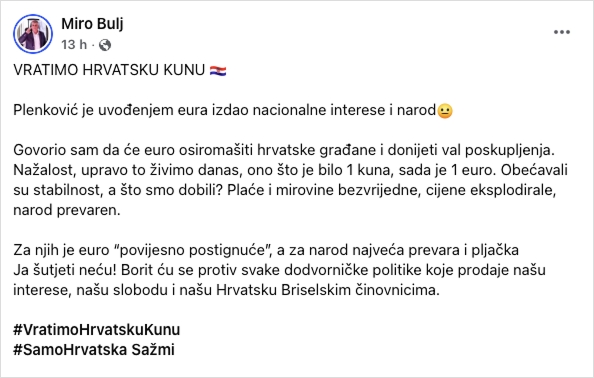
Screenshot: Facebook, profile Miro Bulj
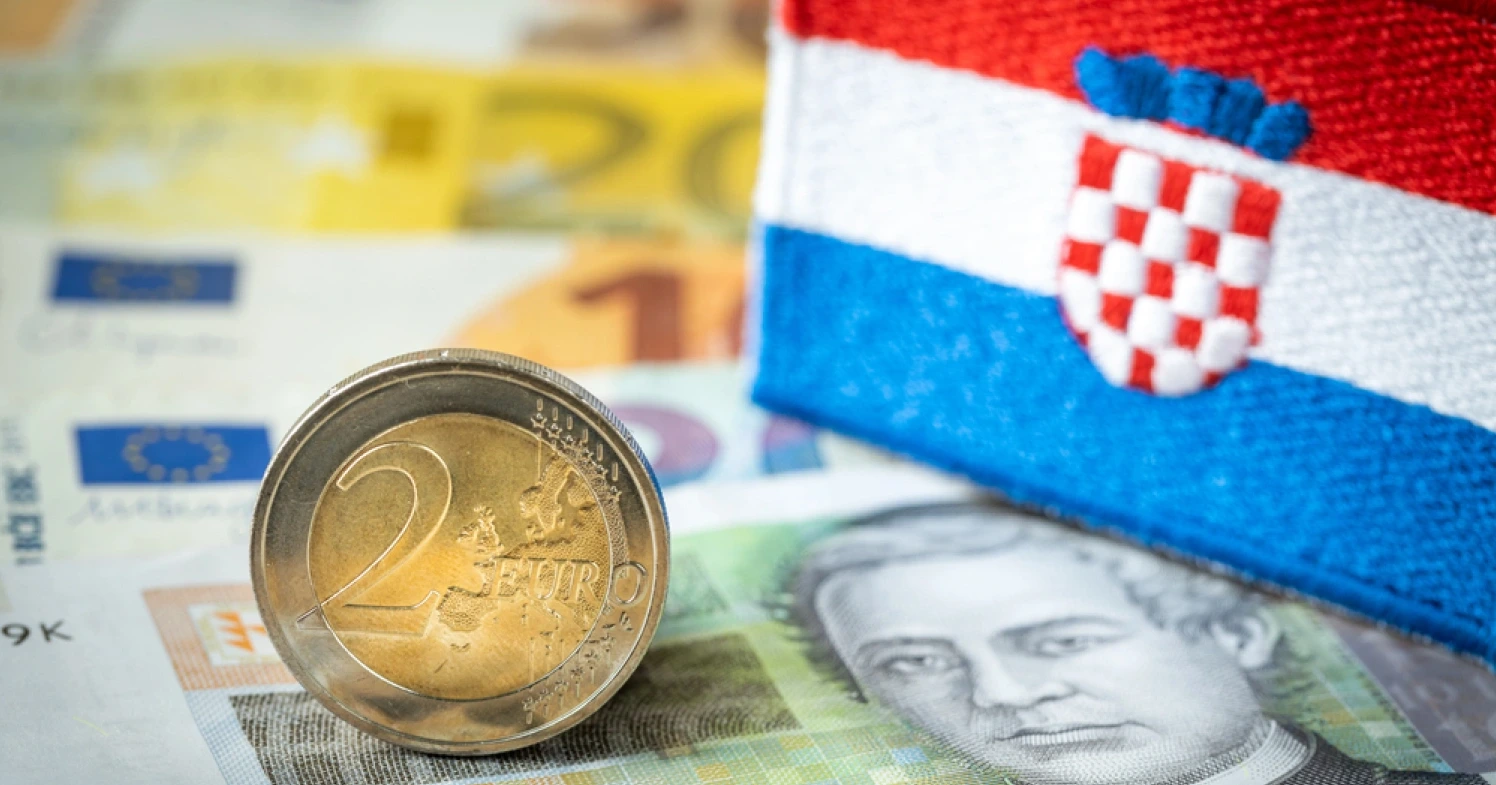
Introduction of the euro in Croatia
According to data from the Croatian National Bank, the effect of the introduction of the euro on price growth was mild and one-off, with an estimate of up to 0.4 percentage points of inflation at the beginning of 2023. Inflation in Croatia at that time was also influenced by other factors, and real wages showed strong growth during 2024. Therefore, claims about a long-term decline in the value of wages and pensions do not reflect the statistically confirmed course of events.
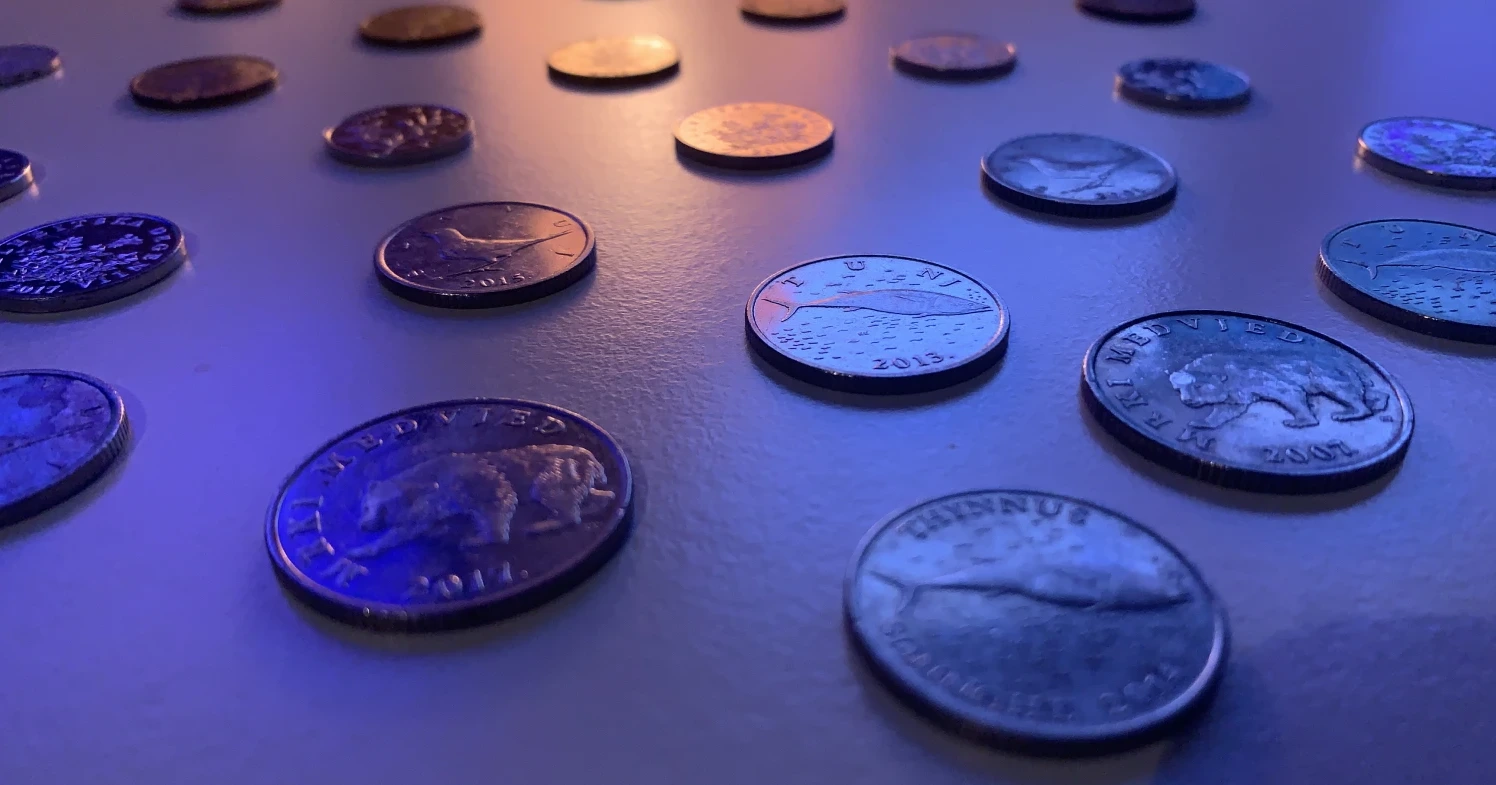
The kuna served as the official currency of the Republic of Croatia from 30 May 1994 until the end of 2022, after which on 1 January 2023 the euro became the country's official currency. The process of replacing the kuna with the euro included multi-year preparations, including aligning legislation and the financial system with European standards. The exchange of cash was carried out during 2023, whereby citizens can exchange kuna banknotes without a time limit, and coins until 31 December 2025. Banks participated in the exchange until the end of 2023, and from 2024 the exchange is available only at the Croatian National Bank.
Mandatory dual display of prices, in kuna and euros, lasted from 5 September 2022 to 31 December 2023, in order to enable easier adjustment of citizens and the market to the new currency. The high euroization of the Croatian financial system, especially deposits and public debt denominated in euros, contributed to a smooth transition, although there is no confirmation of the percentage of transactions conducted in euros before the introduction.
National oversight of the introduction of the euro was carried out by the Croatian National Bank and the state through a multi-year strategy and legal regulation, which included the formation of the National Council for the Introduction of the Euro and the adoption of a law regulating all important aspects of the transition, including conversion, dual circulation, and market monitoring.