


Konzum Christmas bonuses
Konzum and Retail Union Sign New Agreement: Higher Wages and Bigger Christmas Bonuses for Employees
11.12.2025.
09/30/2025
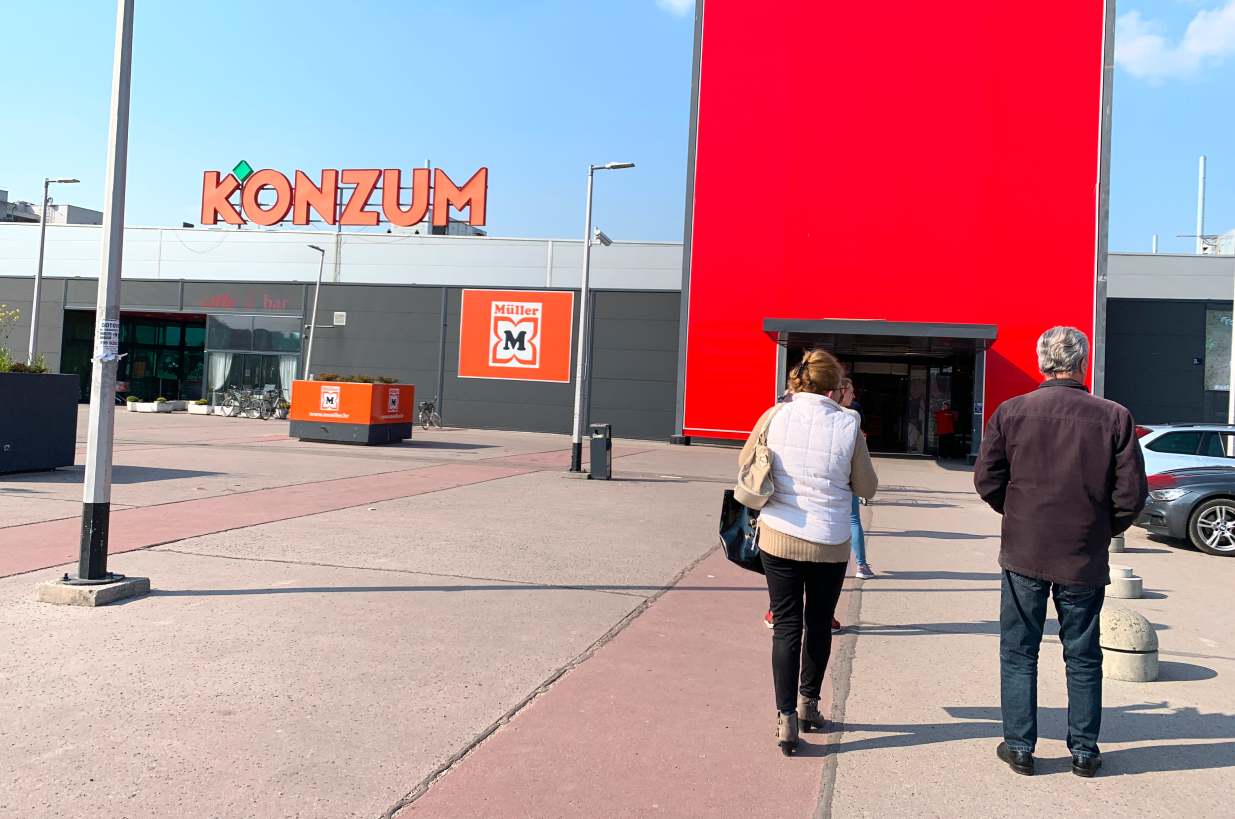
The Croatian Competition Agency (AZTN) published a study on the mixed goods retail market in Croatia for 2024.
The results confirm that Konzum plus remains the largest retailer, despite a slight decline in market share, while Studenac continues to expand its network and record strong revenue growth. The total revenues of all observed retailers amounted to 8.41 billion euros, which is an increase of 8.8 percent compared to 2023.
The number of points of sale reached 5,266, with the strongest growth recorded by small stores. Net sales area increased to 1.63 million square meters, with supermarkets holding the lead. Retail growth in 2024 amounted to 8.8 percent, which is slightly lower than the growth in 2023, when inflation and rising food prices more strongly boosted revenue.
Among the leaders, Konzum plus remains at the top with a market share between 20 and 30 percent and 636 points of sale. The Schwarz Group (Lidl and Kaufland) together holds 20 to 30 percent of the market, while Studenac, with a network of 1,411 stores, leads by number of outlets. They are followed by Plodine, Spar, Tommy, KTC, NTL, and regional chains such as Trgovina Krk and Ribola.
The top 10 chains in 2024 looked like this: Konzum plus, Lidl, Plodine, Spar, Kaufland, Studenac, Tommy, KTC, NTL, and Trgovina Krk. The biggest gains were achieved by Studenac and NTL, while Plodine further strengthened its position in certain counties. The City of Zagreb confirms its dominance in revenues, but significant increases were also recorded in Split-Dalmatia County and Zagreb County.
According to the structure of store formats, supermarkets generate more than half of total revenues, followed by hypermarkets, then self-service stores and small stores, which have the highest percentage growth. Online sales remain marginal and are present at only seven retailers, while customer loyalty is encouraged through loyalty programs in 14 chains.
Over the past ten years, the Croatian retail market has undergone significant changes that have shaped both customer behavior and the strategies of the largest chains.
In the period from 2014 to 2019, strong consolidation took place, international chains strengthened their positions, while domestic ones sought ways to adapt and reinforce their regional foundations. Lidl rapidly expanded its store network and product assortment during that period, with an emphasis on lower prices that attracted a large number of customers.
After the Agrokor crisis, Konzum stabilized its operations within the Fortenova Group and retained its status as the largest chain in the country, relying primarily on a broad and evenly distributed network of points of sale. In recent years, Studenac has experienced strong growth thanks to acquisitions of smaller chains and the expansion of its own capacities, thereby building the largest store network in Croatia.
Plodine strengthened its offer of larger formats in the coastal area, and then gradually expanded inland, attracting customers with a favorable ratio of price and rich selection. Tommy remained a stronghold of Dalmatia and the wider region, and built growth through a combination of acquisitions and the opening of new stores.
Eurospin appeared on the Croatian market in 2020. To date, it has developed its network, although it still holds a smaller share than the largest competitors. Digitalization has meanwhile gradually increased, and a growing number of retail chains have developed online sales channels. However, the data show that digital sales in the food segment still account for only a small part of total consumption.
The pandemic from 2020 and subsequent inflationary pressures strongly changed customer habits, so logistics, supply, and price sensitivity became crucial factors. At the same time, sustainability became an important topic, so chains increasingly introduced bio and eco lines, as well as initiatives to reduce plastic in packaging.
Consumers began increasingly choosing the retailers' own brands, known as private label, because they offer a more favorable price-quality ratio. Today, almost all leading chains have well-developed portfolios of their own brands. Regional retailers, despite acquisitions, retained strong positions in their areas and continued to play an important role in local communities.
For the average customer, the biggest changes were related to prices and availability. Competition led to increasingly frequent promotions and the development of loyalty programs, so the choice between retail chains is increasingly based on price, benefits, and proximity of points of sale.