






STEM workshop
Free STEM Workshop for High School Students on Electromagnetic Waves and IoT Announced
16.12.2025.
02/16/2026
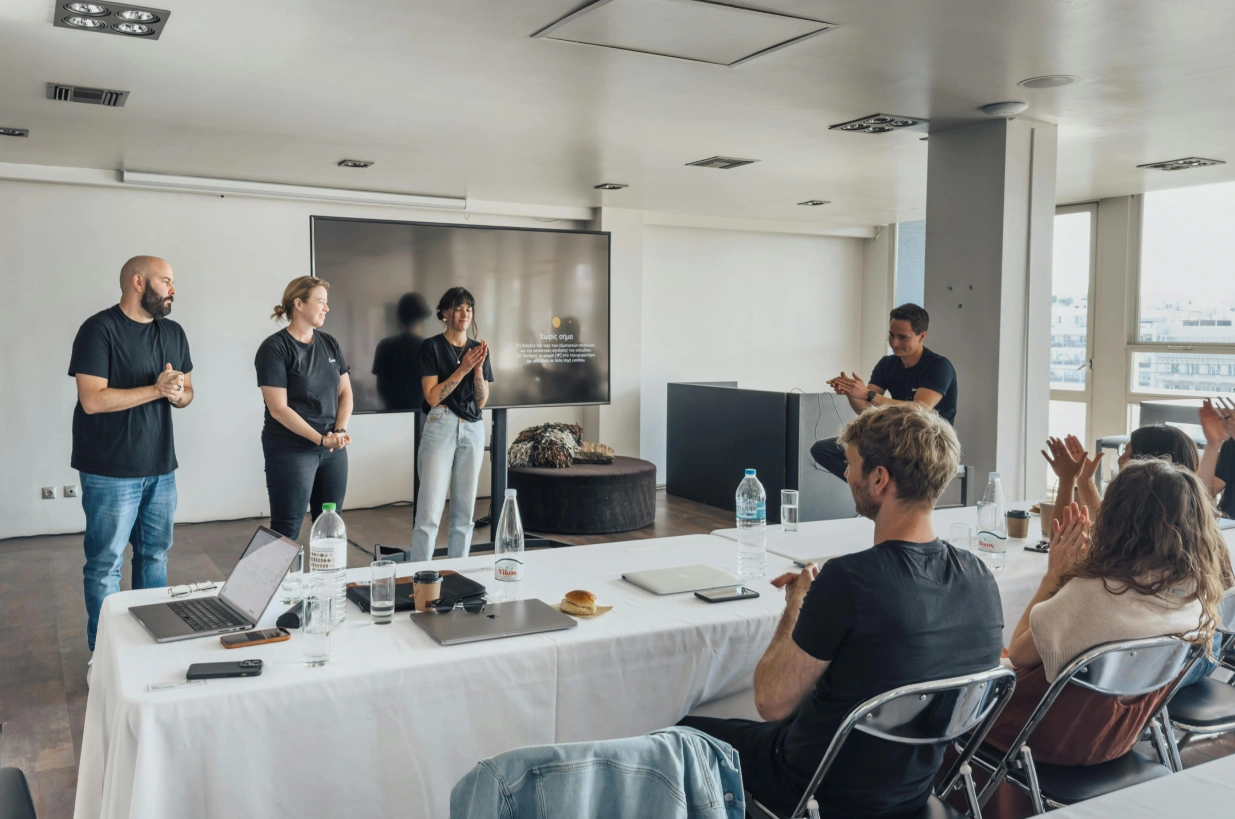
MIPRO, as the coordinator of the MULTISTEM project, in cooperation with partners - the Ruđer Bošković Institute and the Croatian Academy of Engineering - is organizing a timely discussion intended for the professional and young population on the emergence of a new social ecosystem with expanded STEM characteristics.
The goal is to provide insight into future development trends in Croatia by involving the academic community, experts, and young people, and to offer guidance to younger generations in choosing a profession.

Humanoid robotics is on the verge of a transformative global impact. Thanks to the accelerated development of artificial intelligence, materials science, and sensor technologies, humanoid robots are rapidly evolving from laboratory prototypes into practical collaborators in healthcare, hospitality, industrial manufacturing, and public services. Industry forecasts indicate that the global humanoid robotics market will exceed a value of 30 billion euros by 2035, driven by an aging population, chronic labor shortages, and growing demand for human-centered automation solutions.
The European Union has positioned itself as a global leader in the development of trustworthy and human-centered artificial intelligence and robotics through strategic initiatives such as the EU AI Act, the European robotics strategy, and the Horizon Europe funding program. These regulatory and financial frameworks emphasize safety, transparency, and social benefit, values that are aligned with the concept of humanoid robotics whose purpose is to extend human capabilities rather than replace them.
For Croatia and the wider Adriatic-Central European region, humanoid robotics represents an exceptional development opportunity. A strong tradition in engineering, computing, and applied artificial intelligence research, along with the development of technology clusters and innovation ecosystems, creates the foundations for research excellence and commercial application. Tourist-oriented economies in particular, such as Croatia's, can benefit from intelligent service robots that enhance the user experience while at the same time alleviating seasonal and structural challenges in the labor market.
In January 2026, Vandri Robotics (Slovenia) and Croatian institutions established a strategic collaboration in the field of humanoid robotics research and development. The partnership brings together Vandri Robotics' expertise in developing artificial intelligence for humanoid systems and their commercial application.
The central initiative of this collaboration is the HARIS project (Humanoid Adaptive Reasoning and Interaction System). The HARIS project addresses one of the key challenges of service robotics: intuitive and transparent understanding of interaction between robots and people in dynamic, multi-user environments. In busy and multilingual spaces, such as hotel receptions, users must at all times clearly recognize whether the robot is listening to them, whom it is addressing, what its intentions are, and how they should respond.
HARIS is developing an intelligent communication core that integrates spatially adaptive sound, visual status indicators, and context-aware reasoning. The system was validated in a real operational environment through a pilot implementation in Liburnia Riviera hotels in Croatia, confirming its applicability in real service industry conditions.
With the aim of opening dialogue, encouraging cooperation, and catalyzing research and business partnerships between private and public organizations in Croatia and beyond, this inaugural conference is being organized. Participants will explore:
Time and venue:
25 February 2026, 09:00 to 13:00 CET - Ruđer Bošković Institute, Zagreb, Croatia
Organizers:
Ruđer Bošković Institute, Center for Informatics and Computing (within the EuroCC2 and MULTISTEM projects) and Vandri Robotics in cooperation with the Association of Multitasking Managers Business Club and partners.
Participation is free of charge. Prior registration is required here.
Venue: Ruđer Bošković Institute, Bijenička cesta 54, 10000 Zagreb, Croatia
Contact: info@vandri.ai
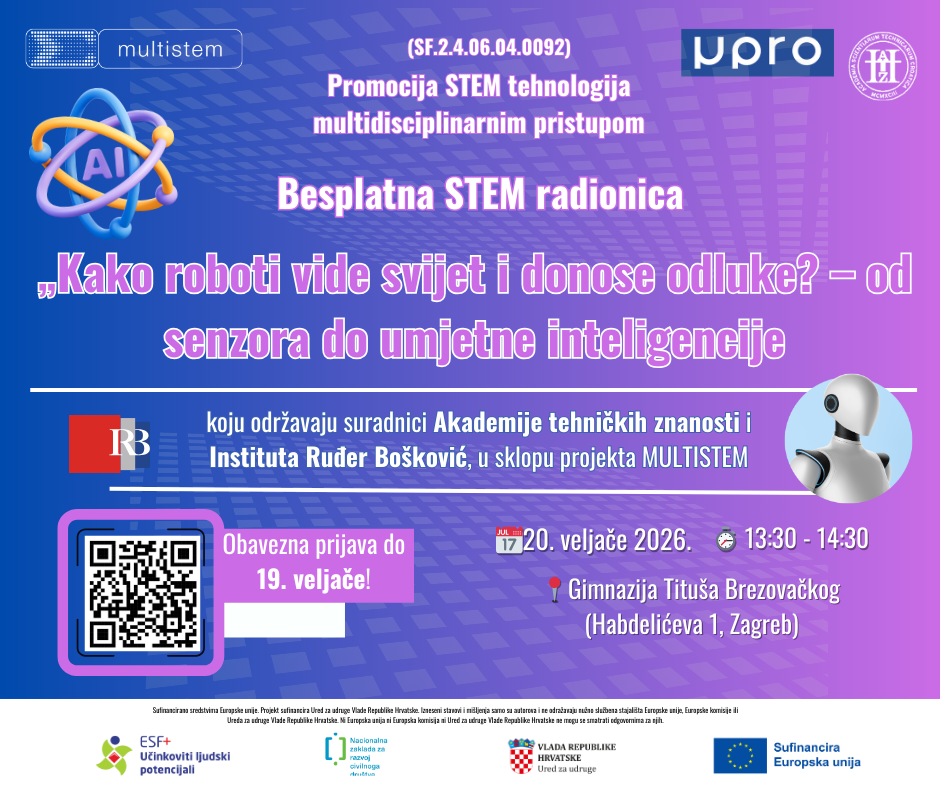
As part of the MULTISTEM project implemented within the STEM program of the Foundation for the Development of Civil Society, high school students are invited to apply for the workshop.
Drop by IRB on 25.2.2026.