





Croatia Sarah Seifert
Well-Known Croatian Woman Speaks Out: '€227 Utility Bills for a Single Person Prove Life in Croatia Is No Longer the Same'
23.02.2026.
01/26/2026
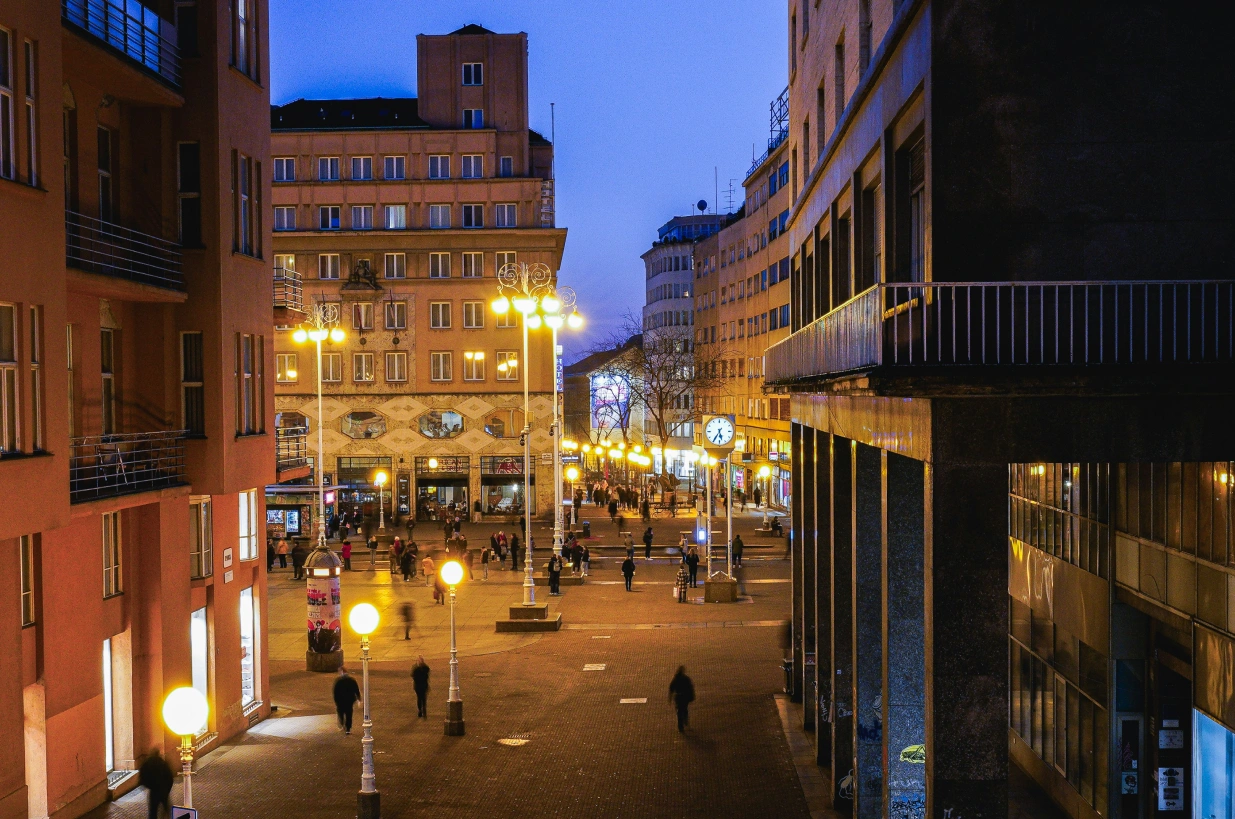
The question of whether daylight saving time or standard time should be retained has long outgrown the bounds of an ordinary administrative decision and has become one of the central topics of public health, economics, and sociology.
Although sleep experts often advocate standard time as more natural for the human biorhythm, the modern way of life and work habits tell a completely different story. It seems that standard time, which we colloquially call winter time, is finding it increasingly difficult to secure its place in a world where most of the population works in offices from nine to five.
The dilemma that becomes актуalized in Croatia twice a year, at the end of March and the end of October, is actually a conflict between old tradition and the new needs of modern man. While the medical profession sticks to biology, citizens are increasingly voting precisely 'for light'.
To understand why this conflict arises, it is necessary to look into the past. Standard time is actually the only 'real', standard time. It was designed and perfectly suited an agrarian society in which the rhythm of life was dictated by sunrise and sunset. In times when most people worked in agriculture, it was logical to align noon on the clock with solar noon. People woke up early to make use of every ray of light for work in the fields, and went to bed shortly after sunset.
Today, the situation in Croatia is diametrically opposite. The revolution in the way of working has moved people from the fields to offices, shops, and factories with fixed working hours. The 9-to-5 working hours model has become the standard, and it is precisely this model that creates the greatest dissatisfaction during the winter months. Modern man no longer depends so much on the sun to do his job, but rather on artificial lighting and working hours defined by an employment contract, not by the position of the sun.
The main argument against standard time in modern society is the effect of darkness in the afternoon hours. The average employee who finishes work at 5 p.m. during standard time steps out into complete darkness. Such a situation drastically reduces quality of life because it limits opportunities for spending time outdoors, playing sports, or engaging in social activities after working hours.
The psychological effect of this phenomenon should not be overlooked. Many people feel a drop in energy and mood when their free time takes place exclusively under artificial lighting. Daylight saving time, which shifts one hour of daylight from early morning to evening, allows people to still see the sun after work. In modern sociology, this is called 'usable daylight'. Simply put, usable light is the light we have when we are awake and free, not the light we miss while sleeping or commuting to work.
In Croatia, this problem is particularly pronounced due to the geographical position and the habits of the population, who like to spend time outdoors. The practice of changing the clock is carried out by government regulation, aligned with European Union directives. Daylight saving time begins on the last Sunday in March, when the clock hands are moved forward by one hour, while standard time returns on the last Sunday in October, by moving the clock hands back by one hour, specifically from 3 a.m. to 2 a.m.
It is precisely this return to standard time in October that many citizens experience as a shock. Although it gives us one extra hour of sleep that night, the long-term price is the loss of light in the afternoon hours. Croats, as a nation that nurtures a culture of drinking coffee and socializing outdoors, experience that darkness at 4:30 p.m. as a sudden interruption of social life.
Analyzing the advantages brought by a model with more light in the afternoon hours, it is clear why the public is increasingly leaning toward permanent daylight saving time. An extra hour of light in the evening brings concrete benefits that are easily understandable to every citizen.
Primarily, it is about encouraging consumption and social life. When it is still daylight outside after working hours, people are more inclined to go to shops, restaurants, or for a walk around town, which directly benefits the economy. Restaurateurs and retailers regularly record higher turnover during periods with longer days because people simply do not rush home 'to the safety of home' as soon as darkness falls.
The second key advantage relates to the physical health of the nation. An extra hour of light motivates citizens to engage in recreational activities. You are much more likely to go running, cycling, or take the children to the park if it is daylight outside than if it is pitch dark. In an era of sedentary lifestyles, that encouragement to move becomes a public health priority. Also, the sense of safety is greater because returning home, going shopping, and carrying out afternoon obligations take place with natural visibility, which statistically also reduces the number of traffic accidents in the afternoon rush when drivers' concentration is already lower.
It is interesting to note how the arguments of the medical profession sometimes clash with citizens' preferences. Doctors often point out that morning light is crucial for waking the body and regulating the sleep hormone, melatonin. According to them, standard time is healthier because it allows us to wake up with the sunrise, rather than in the dark.
However, simply put, it has become more important to modern man how he feels in his free time than how he feels while commuting to work. Most people are willing to sacrifice an hour of morning darkness, during which they are in any case in the office, school, or public transport, for an hour of light they can use for their own enjoyment. This shift in priorities clearly shows that our biological needs may have remained, but our social needs have changed irreversibly.
The debate about timekeeping is no longer just a question of astronomy, but a question of quality of life. Although standard time technically follows the movement of the sun more precisely, daylight saving time better follows the movement of modern man. In a world where working hours dictate our rhythm more than nature, the desire for a 'longer day' is not a whim, but an adaptation to new life circumstances. While Europe is still negotiating the final abolition of moving the clock hands, the voice of the citizens is clear: give us light when we can use it.