

Croatia foreign workers
Record Numbers of Foreign Workers in Croatia: Nepalis Catching Up with Bosnian Citizens
17.12.2025.
11/19/2022

I previously worked in Malaysia, and this is the second country where I decided to look for a job. It was good there too, but if I have to compare, it is far better here, says Nepali Dhirendra Tamang
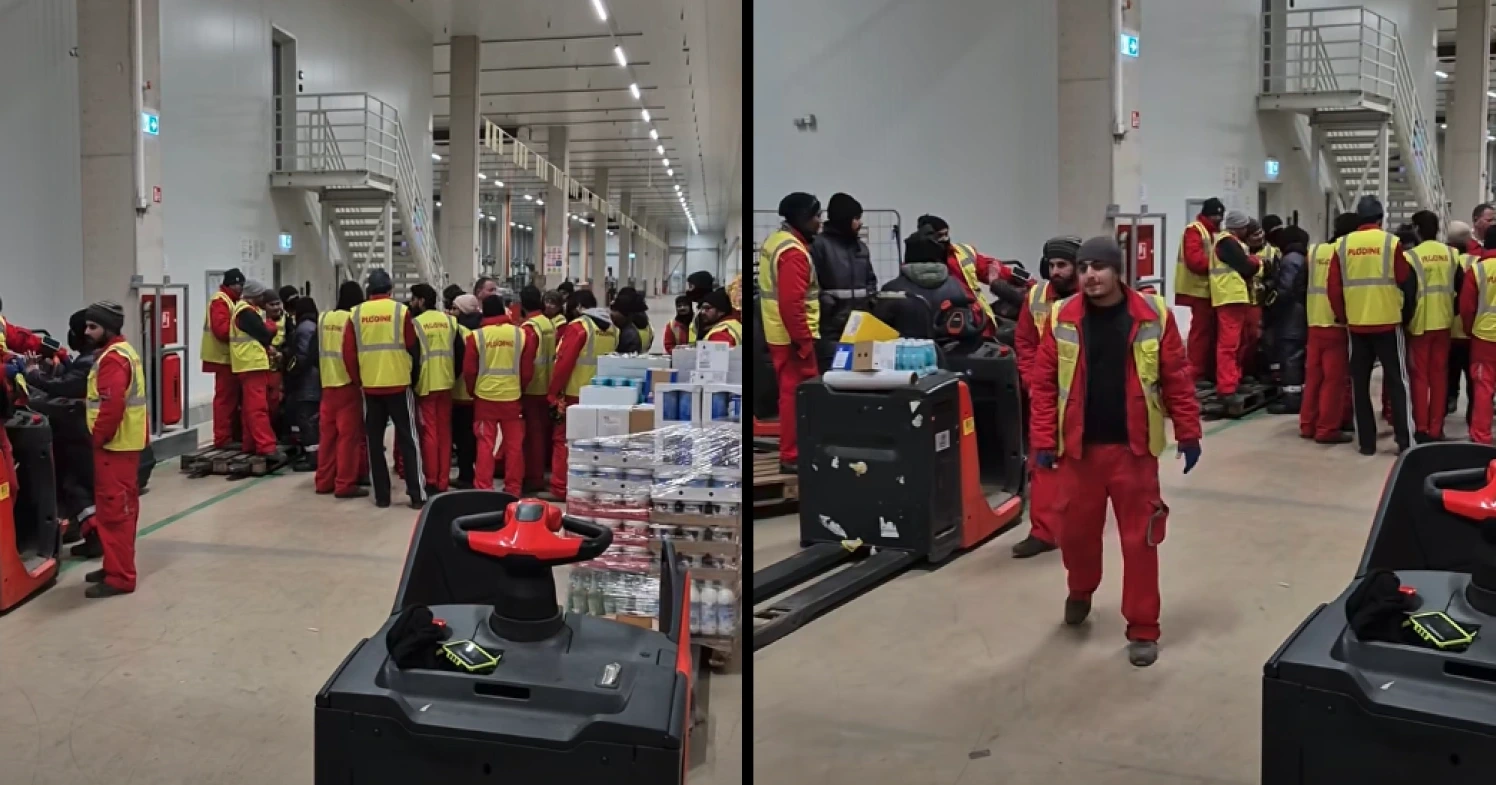
RIJEKA – Over the past several years, it has been possible to see foreign workers, workers from third countries, doing various jobs in tourism and hospitality and on construction sites during the summer and winter seasons, and recently more and more Nepalis, Indians, Filipinos, and workers from many countries far from us can be seen in an increasing number of workplaces in Rijeka, especially in delivery jobs.
It is undeniable that last year's abolition of quotas for employing foreigners also contributed to the growing number of foreign workers, and this is confirmed by data from the Primorje-Gorski Kotar Police Administration, which informed us that the number of received residence and work permits is increasing compared with previous years. According to their data, in the police administration with its affiliated police stations, 13,116 applications for residence and work permits were received in the first nine months of 2022, while in the same period last year a total of 7,617 applications were received, and in the area of the city of Rijeka and the Rijeka ring alone, a total of 4,355 applications were received, while last year their number was 2,732. These data show that this year the number of foreign workers in our area has almost doubled, and an increasing number of employers are turning to hiring them. In line with all sectors, their share in the delivery service is also growing month by month, and in Rijeka it is increasingly possible to see Asians with yellow and blue backpacks delivering orders on motorcycles or bicycles, and many have certainly encountered them at their own doorstep.
A better life in Croatia
We also had the opportunity to speak with one of them, Nepali Dhirendra Tamang, whom we asked during a meeting on Korzo to share his experience of working in Croatia. Namely, like many of his compatriots, Dhirendra arrived in search of what they call a better life, but also better income, because he sends a large part of his earnings to his family.
– It is better for me to work in Croatia than at home, and with the money I earn here my family in Nepal can live happily and comfortably, Dhirendra tells us. He explained that in Rijeka he lives with a group of workers who also arrived from Nepal, and the rent for their apartment in the city center is paid by the delivery company they work for.
– I have no experience working in other European countries. I previously worked in Malaysia, and this is the second country where I decided to look for a job. It was good there too, but if I have to compare, it is far better here, Dhirendra added, concluding that he is satisfied and feels good in Croatia.
The trend of a growing number of foreign workers in delivery jobs was also confirmed to us by the response of Marin Šušnjar, director of the Wolt platform in Croatia. According to him, partners who employ couriers noticed that they could not secure a sufficient number of people solely through applications from Croatian citizens, so they decided to expand the pool of potential employees and turn to importing and employing foreign nationals.
There will be more and more employment of foreign workers
Desanka Babić from the Star employment mediation agency, which has been engaged for several years in bringing in foreign workers throughout Croatia, explained that the trend of employing foreign workers will continue to grow in the future, and that the most important thing will be to attract quality labor and adapt it to our labor market.
– In construction and tourism there is a constant need for foreign workers. The pool of workers from our neighboring countries, Bosnia and Herzegovina and Serbia, is getting smaller and smaller. They are independently leaving for Germany and other Western European countries, and it is becoming increasingly difficult for us to attract them, especially for a certain period of several months during the summer or winter season. Since they are no longer available, employers are increasingly turning to workers from Nepal, Pakistan, and India, Babić tells us.
– Since the number of couriers needed is growing in line with the growth of our company, it happens that with applications from the domestic population we cannot achieve the required number of couriers. Precisely because of the needs of growth and expansion of the industry, we have opened up the possibility of work to foreign nationals as well, and the countries our partner companies cooperate with the most are India, Nepal, and the Philippines, but also North Macedonia, Albania, and countries closer to us. Still, the current percentage of foreign nationals working on the Wolt platform in Rijeka as partner couriers is less than 5 percent of the total number of couriers, Šušnjar told us.
A complex procedure
– The partner company provides foreign nationals with accommodation, sometimes food, work permits, a delivery vehicle, and everything a foreign national needs to be able to work and live comfortably, Šušnjar explains, adding that they make every effort to ensure that the partners they work with are vetted, reliable, and that working conditions are equal, fair, and motivating for everyone.
– At Wolt we do not make a distinction between couriers, and foreign nationals have proven to be just as efficient as everyone else working on our platform. Also, partner companies that employ foreign nationals do their utmost to provide support so that they can fit into the new culture they are coming to as quickly as possible and so that their living and working conditions are comfortable and motivating, Šušnjar concluded.
Although there are more and more foreign workers, the procedure for applying for residence and work permits for foreign nationals is not simple, and it is necessary to obtain a positive decision from the Croatian Employment Service as well as a permit from the Ministry of the Interior, but it is positive that everything can be resolved electronically. Foreign nationals come to our country at the request of an employer or a temporary employment agency. They first contact the HZZ, which within 15 days must carry out a labor market test and issue a positive decision on the basis of which the employer submits an application for the issuance of a residence and work permit, and after it is determined that all conditions prescribed by the Foreigners Act are met, the permit approval is issued by the competent police administration or station. According to data obtained from the Primorje-Gorski Kotar Police Administration, a residence and work permit is issued for the period for which the employment contract has been concluded and may last up to a maximum of one year, and a third-country national may work only for the employer and in the jobs for which the residence and work permit was issued.
I previously worked in Malaysia, and this is the second country where I decided to look for a job. It was good there too, but if I have to compare, it is far better here, says Nepali Dhirendra Tamang.
RELATED NEWS
Work is underway on the western plateau of Ploče beach to enable easier access for people with disabilities
PHOTO NK Zamet for Vukovar: Check out the impressive torchlight display and lanterns of احترام
“Treasure hunt – Rijeka culture” winning project of Action for 5! Here is what Rijeka high school students are planning
Be quick, get to know T Phone and T Phone Pro before everyone else!
Linker
RIJEKA – Over the past several years, it has been possible to see foreign workers, workers from third countries, doing various jobs in tourism and hospitality and on construction sites during the summer and winter seasons, and recently more and more Nepalis, Indians, Filipinos, and workers from many countries far from us can be seen in an increasing number of workplaces in Rijeka, especially in delivery jobs.
It is undeniable that last year's abolition of quotas for employing foreigners also contributed to the growing number of foreign workers, and this is confirmed by data from the Primorje-Gorski Kotar Police Administration, which informed us that the number of received residence and work permits is increasing compared with previous years. According to their data, in the police administration with its affiliated police stations, 13,116 applications for residence and work permits were received in the first nine months of 2022, while in the same period last year a total of 7,617 applications were received, and in the area of the city of Rijeka and the Rijeka ring alone, a total of 4,355 applications were received, while last year their number was 2,732. These data show that this year the number of foreign workers in our area has almost doubled, and an increasing number of employers are turning to hiring them. In line with all sectors, their share in the delivery service is also growing month by month, and in Rijeka it is increasingly possible to see Asians with yellow and blue backpacks delivering orders on motorcycles or bicycles, and many have certainly encountered them at their own doorstep.
A better life in Croatia
We also had the opportunity to speak with one of them, Nepali Dhirendra Tamang, whom we asked during a meeting on Korzo to share his experience of working in Croatia. Namely, like many of his compatriots, Dhirendra arrived in search of what they call a better life, but also better income, because he sends a large part of his earnings to his family.
– It is better for me to work in Croatia than at home, and with the money I earn here my family in Nepal can live happily and comfortably, Dhirendra tells us. He explained that in Rijeka he lives with a group of workers who also arrived from Nepal, and the rent for their apartment in the city center is paid by the delivery company they work for.
– I have no experience working in other European countries. I previously worked in Malaysia, and this is the second country where I decided to look for a job. It was good there too, but if I have to compare, it is far better here, Dhirendra added, concluding that he is satisfied and feels good in Croatia.
The trend of a growing number of foreign workers in delivery jobs was also confirmed to us by the response of Marin Šušnjar, director of the Wolt platform in Croatia. According to him, partners who employ couriers noticed that they could not secure a sufficient number of people solely through applications from Croatian citizens, so they decided to expand the pool of potential employees and turn to importing and employing foreign nationals.
There will be more and more employment of foreign workers
Desanka Babić from the Star employment mediation agency, which has been engaged for several years in bringing in foreign workers throughout Croatia, explained that the trend of employing foreign workers will continue to grow in the future, and that the most important thing will be to attract quality labor and adapt it to our labor market.
– In construction and tourism there is a constant need for foreign workers. The pool of workers from our neighboring countries, Bosnia and Herzegovina and Serbia, is getting smaller and smaller. They are independently leaving for Germany and other Western European countries, and it is becoming increasingly difficult for us to attract them, especially for a certain period of several months during the summer or winter season. Since they are no longer available, employers are increasingly turning to workers from Nepal, Pakistan, and India, Babić tells us.
– Since the number of couriers needed is growing in line with the growth of our company, it happens that with applications from the domestic population we cannot achieve the required number of couriers. Precisely because of the needs of growth and expansion of the industry, we have opened up the possibility of work to foreign nationals as well, and the countries our partner companies cooperate with the most are India, Nepal, and the Philippines, but also North Macedonia, Albania, and countries closer to us. Still, the current percentage of foreign nationals working on the Wolt platform in Rijeka as partner couriers is less than 5 percent of the total number of couriers, Šušnjar told us.
A complex procedure
– The partner company provides foreign nationals with accommodation, sometimes food, work permits, a delivery vehicle, and everything a foreign national needs to be able to work and live comfortably, Šušnjar explains, adding that they make every effort to ensure that the partners they work with are vetted, reliable, and that working conditions are equal, fair, and motivating for everyone.
At Wolt they say that foreign nationals have proven to be just as efficient as everyone else / Photo B. MATIČIĆ
– At Wolt we do not make a distinction between couriers, and foreign nationals have proven to be just as efficient as everyone else working on our platform. Also, partner companies that employ foreign nationals do their utmost to provide support so that they can fit into the new culture they are coming to as quickly as possible and so that their living and working conditions are comfortable and motivating, Šušnjar concluded.
Although there are more and more foreign workers, the procedure for applying for residence and work permits for foreign nationals is not simple, and it is necessary to obtain a positive decision from the Croatian Employment Service as well as a permit from the Ministry of the Interior, but it is positive that everything can be resolved electronically. Foreign nationals come to our country at the request of an employer or a temporary employment agency. They first contact the HZZ, which within 15 days must carry out a labor market test and issue a positive decision on the basis of which the employer submits an application for the issuance of a residence and work permit, and after it is determined that all conditions prescribed by the Foreigners Act are met, the permit approval is issued by the competent police administration or station. According to data obtained from the Primorje-Gorski Kotar Police Administration, a residence and work permit is issued for the period for which the employment contract has been concluded and may last up to a maximum of one year, and a third-country national may work only for the employer and in the jobs for which the residence and work permit was issued.
NL ARCHIVE
Differences in the way of working
Desanka Babić from the Star employment mediation agency explained to us how the arrangement by which foreign workers arrive functions. Namely, Croatian employment mediation agencies conclude contracts with local, foreign agencies which, based on their requests, seek appropriate labor. Upon arrival, the foreign worker pays only for the plane ticket, while the agencies, for having brought them the worker and if both sides are satisfied, charge the employer a monthly fee. In this way, says Babić, they worked with GP Krk, but also with many other companies.
– When you have a foreign worker, you must provide them with accommodation and food, which our workers do not need. This certainly increases the cost of that worker, but the problem is that there are no other workers, especially in construction, she explained. The population of Croatia and Europe is getting older, there is less and less labor force, and imports will continue to grow. The only and biggest problem will be bringing in quality labor that is in some way trained and familiar with our labor market. Workers who come from India, Pakistan, and Nepal, apart from experiencing culture shock, are not familiar with our way and conditions of work. At the same time, it cannot be said that they do not know how to work, but simply that they have experience with different work principles, and a period of several months should be found for them to learn and adapt. On our website we have therefore posted relevant data and information about working conditions, and what we are trying to achieve, and what I believe the Government of the Republic of Croatia should also do, is devise a way in which we would train foreign workers before they start working and arrive in our country. This would reduce the gap between what foreign workers believe is expected of them, and employers would be provided with quality labor, concludes Desanka Babić.
Source: index.hr