


Sweden euro
Should Sweden Adopt the Euro Despite Resistance: Is the Krona Becoming Too Heavy a Burden on Household Budgets?
04.02.2026.
07/27/2022

Hedge fund EDL announced to its clients that they expect the euro to fall to a value of only 0.80 dollars, and perhaps even the breakup of the eurozone
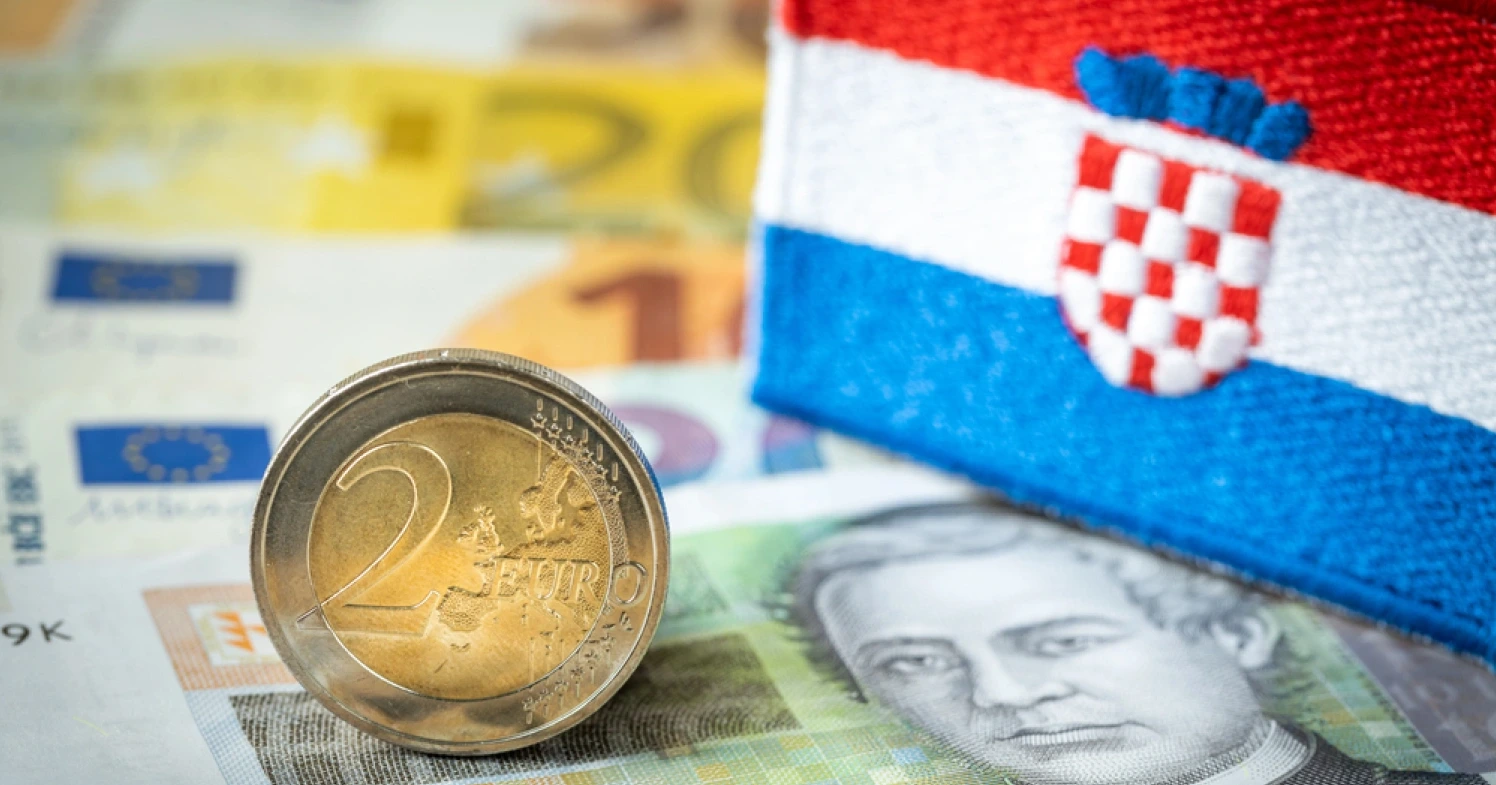
Some investors plan to profit well from the further decline in the value of the euro, and perhaps even the complete collapse of the common European currency, which Croatia is supposed to adopt from the beginning of 2023. What are the theoretical chances that the euro could, for example, weaken dramatically by the end of the year or perhaps even collapse even though Croatia has already issued historic euro coins?
Hedge fund EDL Capital is betting with its investments that the euro will sink further to levels not seen since its introduction because strong inflation and political instability in several eurozone members are testing the cohesion of the eurozone. Turbulence in bond markets as well, which is raising borrowing costs for several southern members, as well as new energy pressures from Vladimir Putin make the pessimistic euro scenario realistic, but also very risky for investors putting their money on the further slide of the common eurozone currency, which during last year and this year approached parity with the US dollar.
Almost 1:1 with the dollar
Today the euro is worth only 1.01 dollars, which means that overall last year and this year it weakened by a huge 28 percent against the dollar. The founder of the EDL fund, Edouard de Langlade, believes that a combination of factors will cause the so-called “euro bear market” to continue, an opinion basically shared by a large number of investors and analysts in foreign exchange markets. However, Langlade is among the first to openly claim what many think but refrain from saying: the combination of euro risks (inflation, recession, energy crisis, the need to raise interest rates…) could lead Germany to refuse to bear the ever-growing cost of keeping eurozone members together.
– Europe is on the brink of catastrophe, potentially leading to its breakup – Langlade told his clients in the usual monthly letter, according to Bloomberg. “We can move to a place where the dollar is not strong relative to everything (currencies, editor’s note), but the euro is weak relative to everything,” Langlande emphasized, concluding that they are targeting the euro’s value to fall to only 0.80 cents per dollar.
EDL is a hedge fund focused on so-called macro money management strategies, and founder Laglande previously traded for Moore Capital Management. Since founding his fund, he has made money for investor-clients, but in February he suffered losses due to bets on Russia. His new strategy – which foresees a further fall of the euro all the way to the level from 2000, when the ECB intervened to strengthen it – is very risky, or somewhat extreme because, simply put, no one has a crystal ball in a situation where the global geopolitical situation is extremely complex.
ECB lags behind the FED
At the moment it is clear that the euro is under strong pressure because the US Federal Reserve has repeatedly raised interest rates decisively to stop inflation, which has made the American currency and debt instruments much more attractive than other currencies, including the euro. Until very recently, the ECB had waited to raise interest rates and, despite inflation, was basically still pursuing an extremely stimulative monetary policy, which leads to currency weakening. But it is completely unpredictable whether such an imbalance in the Fed’s actions relative to the ECB will remain in the months to come, or whether the positions could even change completely.
Barry Eichengreen, professor of economics and political science at Berkeley, California, wrote an analysis for FT in which he asks the question: “Will the dollar make a U-turn?”. His thesis is that the Fed, by raising interest rates, has affected the dramatic weakening of a whole series of currencies, including the euro. Some countries (such as Sri Lanka, Argentina, Pakistan…) have even entered dramatic problems with their domestic currencies due to the strengthening of the dollar and are threatened with bankruptcy. Some countries that do not have excessive debts (such as Chile) are managing to defend themselves in that reverse currency war by aggressively raising interest rates (Chile did this 9 times).
The euro too was under an obvious choice, so the ECB made its first cautious move of raising interest rates by 0.50 percentage points. Now the American Fed is signaling another interest rate hike of 0.75 percentage points, which implies further drama for the eurozone, but Eichengreen estimates that signs of recession in the United States will nevertheless affect the Fed’s determination to continue raising interest rates. Namely, it is not realistic to expect that the Fed will dare to continue raising interest rates and borrowing costs in conditions where a recessionary environment complicates the situation in retail, the real estate market, the stock market… Even if inflation remains at high single-digit rates.
If inflation eases even a little and recession sets in, Eichengreen is convinced, the Fed will no longer raise interest rates, and the movement of the dollar’s value will change direction – the world’s main reserve currency will begin to weaken. That will, of course, also affect the dollar-euro relationship, so the EDL hedge fund’s bet on a further dramatic weakening of the euro seems very risky.
On the brink of a global recession
After all, the global geopolitical and economic situation is such that any predictions are thankless. The International Monetary Fund warned on Tuesday in a fresh update of the World Economic Outlook that global economic prospects are becoming increasingly gray; “The world could soon be walking on the edge of a global recession, only two years after the last one,” wrote IMF chief economist Pierre-Olivier Gourinchas in a blog related to the IMF report.
Back in March, the IMF lowered global growth projections from last year’s 6.1 percent to 3.2 percent in 2022, and they certainly expect further slowing in 2023. IMF projections also depend on future decisions by the American Fed. If the Fed continues to raise interest rates, that will mean a further strengthening of the dollar and a large number of investors will turn to increasingly profitable US Treasury issues, but it will mean additional pain for many emerging markets.
A whole series of countries is already suffering because of the strong dollar; their borrowing costs have risen sharply, as have import costs. The situation is particularly sensitive in the poorest countries. If Russian gas is halted and the trend of rising prices continues, Gourichas announces that both the eurozone and the United States will have practically no economic growth next year. According to his estimates, the US is already in recession. Gourchas estimates that the Fed’s thesis of a “soft landing of the economy” alongside raising interest rates is not a realistic scenario. In his opinion, with the cooling of the American labor market, some new small shock is enough to initiate a recession.
Source: Jutarnji List