




Croatia foreign workers
Foreign Workers’ Experiences: Croatian Is Difficult, but Opportunities and Wages in Croatia Are Decisive
23.02.2026.
11/13/2025

The Ministry of the Interior (MUP) has published official data on the number of residence and work permits issued to foreign workers, and the figures for the first ten months of 2025 clearly show a significant turnaround and decline compared to the previous year.
Comparing the period from 1 January to 31 October, Croatia issued as many as 27,738 fewer permits than in the previous year, representing a decline of approximately 15.7 percent.
From 1 January to 31 October 2024, a total of 176,904 permits were issued. That figure fell to 149,166 permits issued in 2025. This decline primarily stems from a drastic reduction in permits issued for new employment, as the number of new workers fell from 112,617 in 2024 to 72,987 in 2025. Although an increase was recorded in the number of extensions of existing permits and permits for seasonal workers, it was not enough to compensate for the shortfall of newly employed foreign nationals.
The often-mentioned reason for the sharp slowdown in the issuance of new permits for foreign workers most likely lies in legislative changes, more precisely, in the Amendments to the Foreigners Act adopted by the Government in February 2025. Although, according to Prime Minister Andrej Plenković and Minister Davor Božinović, the main goals of the amendments were more systematic regulation, greater protection of foreign workers, and the prevention of abuses, the new regulations in practice led to significantly stricter and more demanding administrative conditions for employers. Warnings from employers' associations and numerous media reports had already indicated at the time that the new framework would slow down the import of labor, which was later confirmed through the decline in the number of newly employed foreigners.
The most concrete example of administrative tightening is the introduction of mandatory financial guarantees for employers when bringing in new workers. Under the new provisions, the employer must issue a promissory note or similar instrument in favor of the Ministry of the Interior (MUP) to cover the costs of returning a foreign worker in the event of illegal residence. This obligation, together with stricter checks on the alignment of wages with those of domestic workers, proof of adequate accommodation, and the condition of minimum turnover of €10.000 for legal entities and €15.000 for tradespeople in the last six months, has significantly increased financial risk and the administrative burden. As a result, many employers likely decided to slow down or postpone the hiring of new workers, relying instead on extending permits for existing and already established employees.
Analysis by economic activity reveals an interesting trend: tourism and hospitality took the leading position in 2025, while construction recorded the largest decline.
In the ten months of 2025, the most permits were issued in the sectors:
This change is particularly visible in comparison with 2024, when construction was convincingly in the lead with 63,356 permits issued, while tourism and hospitality was then in second place with 51,209 permits. A significant number of permits were also issued in industry (20,616), transport and communications (11,303), and trade (7,404), indicating the broad presence of foreign labor throughout the Croatian economy.
Among the nationals to whom permits were issued, Bosnia and Herzegovina still holds first place with 28,212 permits in 2025, but a significant decrease was also recorded in that category compared to the previous year.
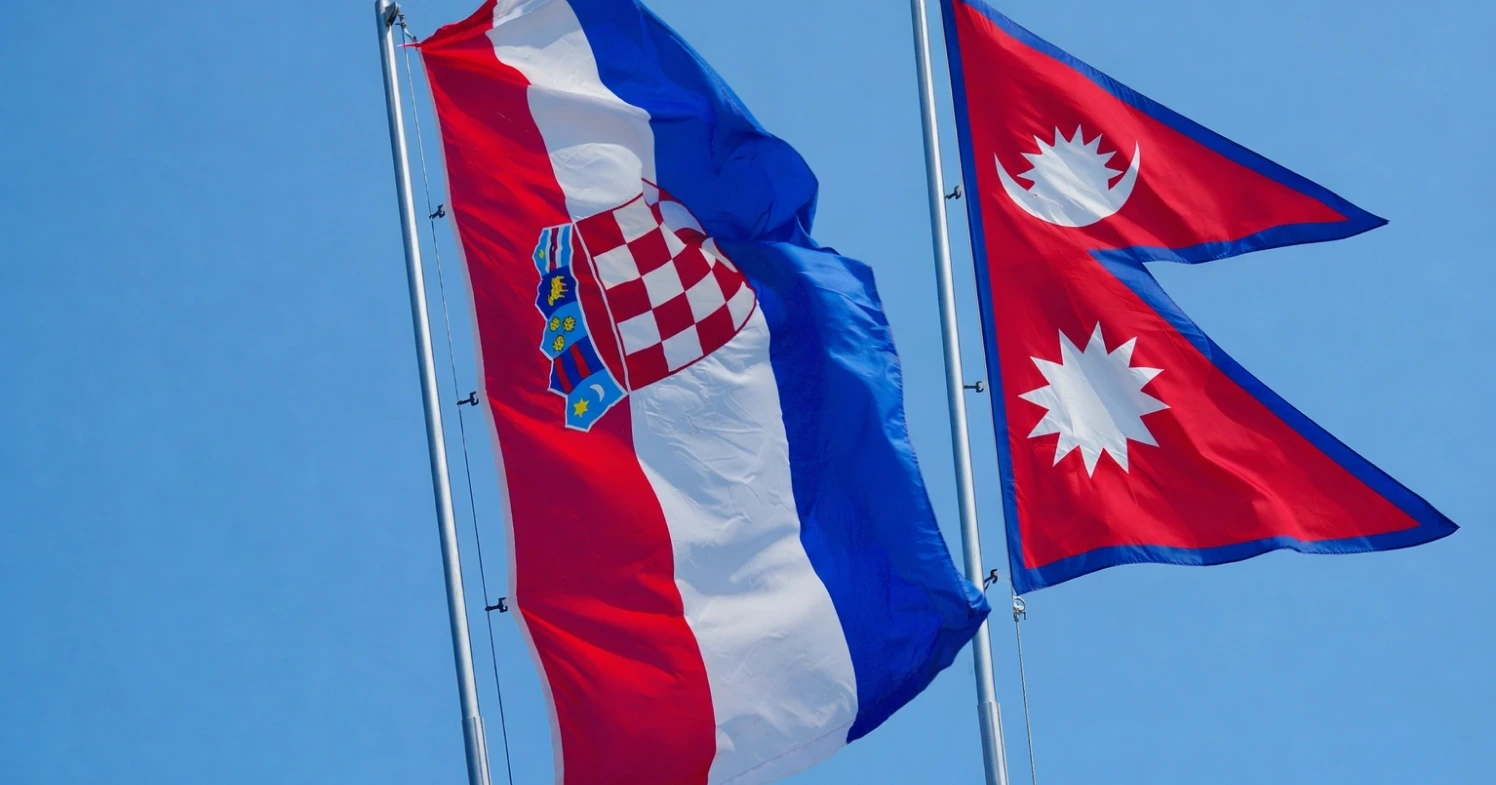
What is particularly striking is that Nepal, with 27,365 permits issued, came extremely close to the leading Bosnia and Herzegovina and confirmed its position as the second most important source of foreign labor.
The list of countries with the highest number of permits issued in the first ten months of 2025 looks like this:
These data clearly show that despite the reduction in the total number of permits, Croatia still heavily depends on foreign workers, with labor sources increasingly shifting from traditionally close European countries toward Asian countries.