




Slovenia Croatia
Slovenian Economist Says: 'By Purchasing Power, Croatia Has Already Overtaken Slovenia'
09.02.2026.
04/02/2026

The latest data on the purchasing power of European citizens for 2025 once again confirms the presence of major economic disparities on the old continent.
While residents of northern and western countries enjoy an exceptionally high standard of living, the countries of southeastern Europe continue to face serious economic challenges. In the Balkans, two currents clearly stand out, showing enormous differences in the everyday standard of citizens.
The term purchasing power, simply put, refers to the real value of the money citizens earn. It is an economic measure that shows how many specific goods and services an individual can buy with their average salary in their own country, taking into account local food prices, housing costs, utilities, and other necessities. If the purchasing power index is higher, it means that citizens can afford a more comfortable life and more things. On the other hand, a very low index indicates that mere survival and basic living costs consume almost the entire household budget.
Photo: Screenshot (Facebook - @mapsporns)

Data analysis shows that Croatia and Slovenia clearly stand out as the most stable economies in this part of Europe.
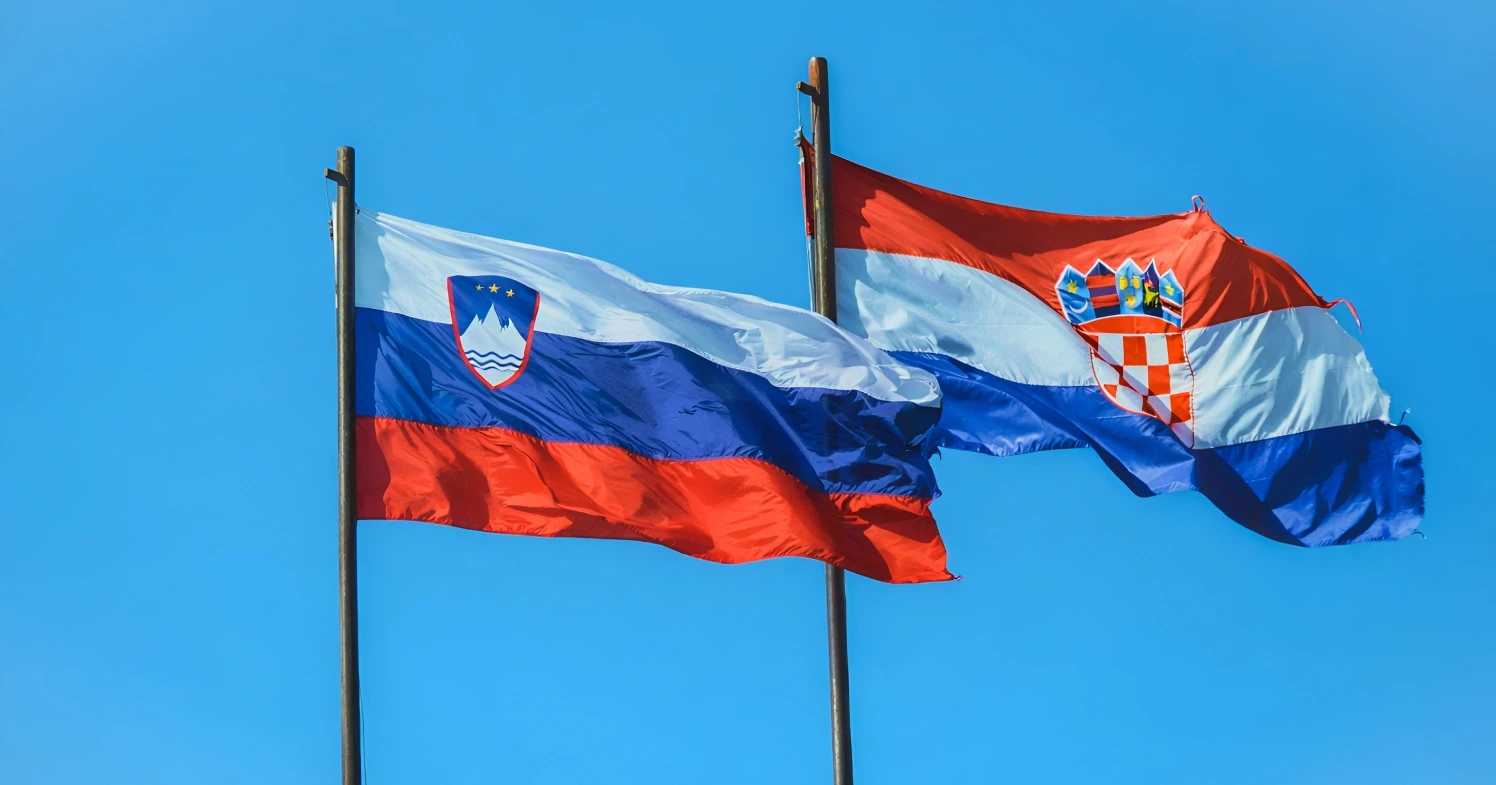
Slovenia holds the leading position in the region with an index of 86.1, placing it among countries with a very solid standard of living. Croatia follows that trend with an index of 80.8, demonstrating significant resilience and a noticeably better position compared to the rest of the Balkans.
These figures confirm that both countries have managed to maintain a balance between rising living costs and citizens' incomes, providing them with a level of economic security that is currently unattainable in neighboring countries.
Although Croatia's result is very good by regional standards, Slovenia's advantage is no coincidence. The key difference lies in the very structure of the economy. Croatia relies too heavily on tourism, which makes up almost 20% of the total economy and mostly brings seasonal and lower-paid jobs. Slovenia, on the other hand, has wisely developed a strong industry and high value-added production. Their companies produce medicines, automotive equipment, and technology for export, creating well-paid and permanent jobs throughout the year. In addition, Slovenian labor productivity is noticeably higher.
For Croatia to catch up with Slovenia, it is necessary to make a major economic shift. The state must urgently reduce the tax burden on labor so that workers' net wages can rise. It is necessary to strongly encourage the IT sector, modern agriculture, and year-round production, instead of relying every year solely on the success of the summer season for survival. Reducing bureaucracy and attracting serious foreign investors into technological sectors are the only ways to permanently raise Croatia's standard of living.
When analyzing the situation in the rest of the region, the data reveals a very precise ranking. Bosnia and Herzegovina records a purchasing power index of 64.3, which places it noticeably ahead of Serbia. This numerical result proves that the citizens of Bosnia and Herzegovina manage to maintain a better ratio of everyday income to basic living costs than their eastern neighbors.
North Macedonia, with an index of 60.7, and Serbia, with an index of 59.1, are experiencing a significantly more difficult economic situation.
The data directly indicates that Serbian citizens are suffering a strong blow to their wallets and that their real incomes are not keeping pace with rising prices as successfully as is the case in Bosnia and Herzegovina. By far the most difficult situation in the region remains in Albania, which with an index of only 43.7 convincingly holds the bottom position in Europe.
For Kosovo and Montenegro, purchasing power indices are not listed on the map.
When the focus shifts to the most developed parts of Europe, the differences in standards become even more obvious. Small economies such as Luxembourg with an incredible index of 184.3 and Switzerland with an index of 164.8 represent the absolute leaders, where the ratio of high wages to prices is the most favorable. They are followed by powerful Germany with an index of 130.7 and the Scandinavian countries. Although inflation and price growth of several % have slowed even the richest European nations, their standard still remains at a level that the eastern part of the continent is only striving toward.
The economic map of Europe for 2025 brings a clear and objective picture of the continent's financial reality. While the richest European nations continue to offer an exceptional standard, transition economies are progressing at completely different speeds. In the Balkans, an unmistakable boundary of standards has formed. Slovenia and Croatia have managed to secure more stable living conditions and protect the purchasing power of their citizens, while Serbia, Bosnia and Herzegovina, and Albania face a long and very demanding path of fundamental economic changes if their citizens are to move away from the bottom of Europe.
Source of data: The analysis is based on the map of the purchasing power index in Europe published by the Statista platform for 2025.